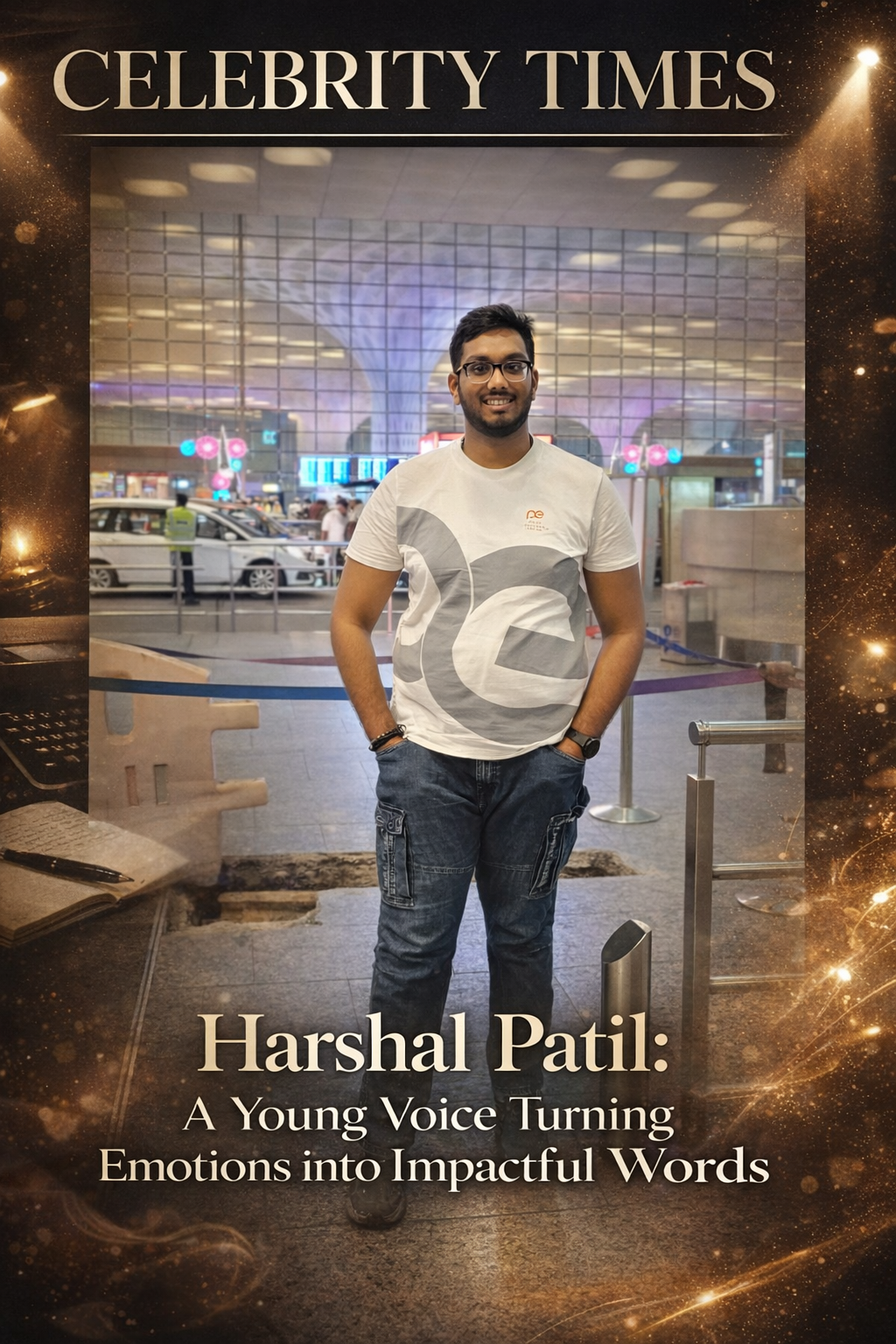
Harshal Patil, a passionate young writer and student, is steadily carving his space in the literary world with his thoughtful and emotionally resonant works. As the author of Love: A Mystery, An Emotion and Much More and Shadows of Redemption, he explores the depths of human emotions and experiences through his writing. Alongside his creative pursuits, Harshal serves as a Trustee at the Shree Shyam Kashi Trust Foundation, reflecting his commitment to both intellectual and social growth. For him, writing is more than just an art—it is a powerful medium to understand life, connect with people, and create a lasting impact through honest expression.
What inspired you to start your journey as a writer?
Ans.: My journey as a writer began with a simple need to express what I often could not say aloud. I have always been deeply observant of people, emotions, silence, and the small moments that shape our lives. Writing became a safe space for me, a place where confusion could become clarity and feelings could find meaning. Over time, I realized that words have the power not only to heal the writer but also to touch the hearts of others, and that inspired me to continue this journey
Your books explore deep emotions—what draws you most towards such themes?
Ans.: I am naturally drawn to deep emotions because they are at the core of every human experience. Love, pain, hope, loss, redemption, and longing are feelings that connect all of us, regardless of our backgrounds. I believe the most meaningful stories are the ones that make people feel seen and understood. Exploring such themes allows me to look beyond the surface and write about the inner worlds people often carry silently within themselves.
How do you balance your responsibilities as a student and a trustee with your writing?
Ans.: Balancing these roles is not always easy, but I see each part of my life as connected rather than separate. Being a student keeps me curious and grounded in learning, while my role as a trustee helps me stay aware of social realities and responsibilities. Writing then becomes the space where I reflect on all these experiences. I try to manage my time with discipline, but more importantly, I write whenever life gives me something worth understanding more deeply. In many ways, my responsibilities do not take me away from writing—they give me more to write about.
You mentioned that writing helps you understand life more deeply—can you share a moment when writing changed your perspective?
Ans.: There have been moments when I began writing about pain or confusion, but by the end of the page, I understood myself differently. One such moment was when I wrote about emotional struggle and realized that not every wound is meant to break us—some are meant to teach us compassion, patience, and strength. Writing helped me shift from simply feeling an emotion to truly reflecting on it. It made me realize that life is not only about what happens to us, but also about how honestly we choose to interpret it.
Why do you think writing about culture is important in today’s world?
Ans.: Writing about culture is important because culture carries the identity, memory, values, and lived experiences of people. In a rapidly changing world, cultural writing helps preserve what is meaningful while also creating space for dialogue, understanding, and respect. It reminds us where we come from and helps us appreciate the diversity around us. I believe writing about culture is not just about documenting traditions—it is about giving voice to people’s ways of living, believing, celebrating, and surviving.
What message or impact do you hope your readers take away from your work?
Ans.: More than anything, I hope my readers feel understood, comforted, and emotionally connected through my work. I want them to know that their feelings matter, their struggles are valid, and their stories carry meaning. If my writing can make even one person pause, reflect, heal, or see life with greater sensitivity, then I feel I have fulfilled my purpose as a writer. I want my words to stay with readers not just as sentences, but as feelings they remember.