Why Hidden Truth Is Respected but Exposed Truth Is Rejected
When Truth Is Revealed, Why Do We Call It Wrong?
The Cost of Rejecting Truth: Silence, Suffering, and Suicide
Why Society Fears Truth More Than Pain
Hidden truth is often respected because it remains unchallenging, distant, and comfortably silent. When truth stays hidden, society can romanticize it, intellectualize it, or quietly acknowledge it without having to act. A hidden truth does not disrupt relationships, power structures, family honor, social images, or cultural narratives. It allows people to say, “Yes, this exists,” without asking, “What must I change because of it?” On the other hand, exposed truth demands responsibility. It forces discomfort, accountability, and reflection. When truth is revealed especially emotional truth it threatens identities people have carefully built. It questions parenting styles, marital roles, societal expectations, moral superiority, and even spiritual beliefs. This is why exposed truth is often labeled as “wrong,” “dramatic,” “attention-seeking,” or “unacceptable.” Instead of asking why someone is in pain, society often asks why they spoke about it. We are trained to admire silence and mistrust expression. From childhood, many are taught that speaking about inner struggles is weakness, that endurance is strength, and that adjustment is maturity. As a result, truth that surfaces about loneliness, depression, abuse, failure, or meaninglessness is not met with curiosity but with judgment. People are told to be grateful, to pray more, to think positive, to stop overreacting. This response does not come from cruelty alone; it comes from fear. If we accept another person’s truth, we may have to confront our own suppressed pain. Acceptance requires emotional literacy, and most societies prioritize productivity, reputation, and control over emotional understanding. Therefore, hidden truth feels “safe,” while exposed truth feels “dangerous.” We respect what stays quiet because it doesn’t ask us to evolve.
This collective inability to accept exposed truth has profound consequences, and one of the most tragic is the rising number of suicide attempts. Most people who reach that breaking point did not suddenly want to die; they wanted their pain to stop being invisible. They wanted to be understood without being corrected, to be heard without being evaluated. When individuals repeatedly express distress and are dismissed, minimized, or shamed, they internalize the belief that their truth is a burden. Over time, silence becomes heavier than suffering. Society often reacts to suicide with shock and sympathy, yet fails to examine the long chain of invalidation that preceded it. We mourn the outcome but ignore the environment that made life feel unlivable. If truth were accepted as a teacher rather than a threat, many lives could be transformed. Learning requires humility the willingness to admit that our way of seeing the world is incomplete. Transformation requires courage the courage to sit with discomfort and grow through it. But instead, we prioritize normalcy over honesty and appearance over authenticity. We celebrate success stories while hiding survival stories. We praise resilience but rarely create safe spaces for vulnerability. People are encouraged to “be strong” rather than to be real. When truth is not welcomed, individuals learn to split themselves: the socially acceptable self and the suffering self. This inner division is exhausting and isolating. Over time, the mind begins to believe that disappearance is easier than disclosure. Acceptance, learning, and transformation do not fail because humans are incapable of them; they fail because systems, cultures, and relationships are not designed to hold emotional truth. Until we shift from reacting to truth as a disruption to receiving it as an invitation to grow, the cycle will continue. The question is not why people struggle, but why their struggles are still treated as something to hide.
Conclusion
Truth does not destroy lives rejection of truth does. When society learns to listen without fear and accept without judgment, truth can become a bridge to learning and transformation rather than a path to silence and despair.
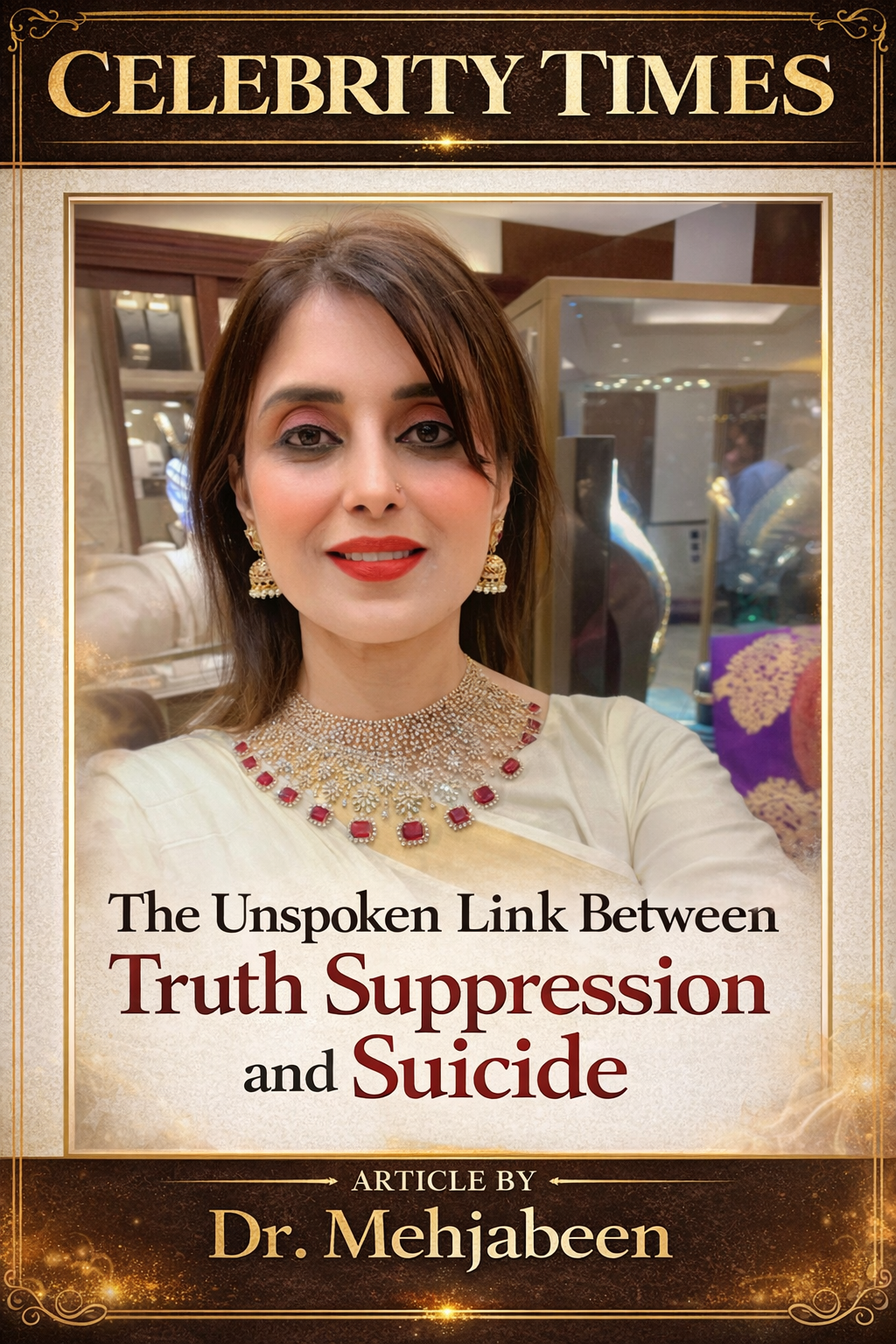
Dr Mehjabeen
Founder Vision High Mental Health Wellness