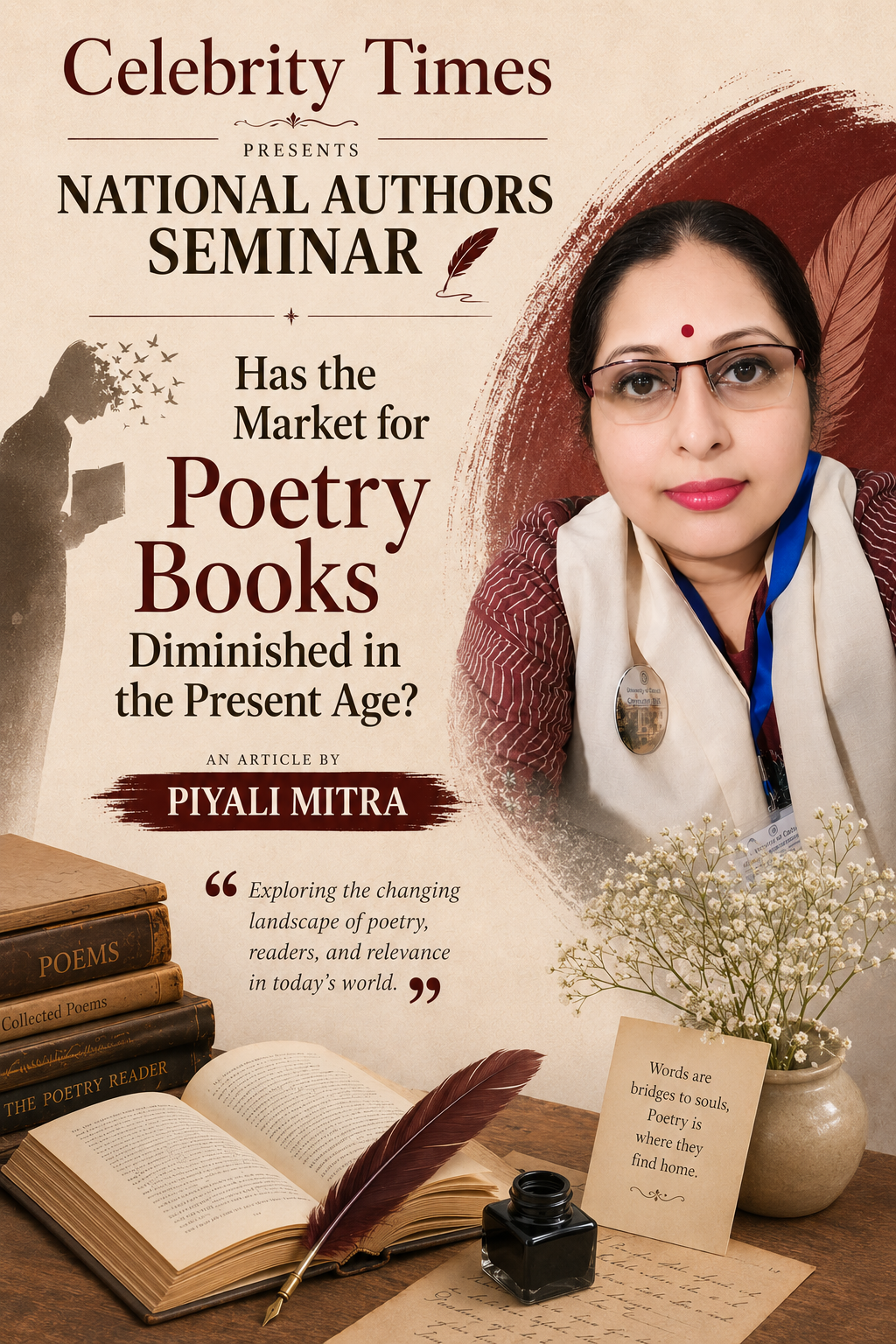
The question of whether the market for poetry books has diminished in the present age is both complex and deeply revealing of contemporary culture. At first glance, the answer appears to be yes. Poetry books today rarely dominate bestseller lists, large publishing houses invest cautiously in poetry collections, and many readers seem increasingly absorbed by fast-paced digital entertainment rather than reflective literary forms. In an age of scrolling, streaming, and shrinking attention spans, poetry appears to occupy a smaller public space than it once did.
Statistics from recent reading surveys suggest a broader decline in deep reading habits. A 2025 YouGov survey reported that 40% of American adults had not read a single book during the year, while poetry remained among the least popular genres. At the same time, digital distractions and algorithm-driven media cultures have altered how audiences consume language and literature. Many readers now prefer short-form visual content over sustained literary engagement. Critics and scholars increasingly warn about the decline of “deep reading” and contemplative attention in the digital age.
Yet declaring the death of poetry would be profoundly mistaken.
Poetry has not disappeared; rather, its form, audience, and modes of circulation have changed dramatically. The traditional image of poetry—a slim printed volume read quietly by a niche literary audience—has evolved into something more fluid and digitally dispersed. Poetry today often lives on social media platforms, spoken-word performances, literary podcasts, YouTube recitations, and Instagram poetry pages. While classical poetry collections may struggle commercially, short lyrical writing has found renewed life through digital culture.
In fact, many younger readers encounter poetry first online rather than through academic institutions or bookstores. Platforms such as Instagram and TikTok have created a generation of “micro-poetry” readers who consume emotionally immediate and visually accessible verse. This phenomenon has transformed poetry into a more democratic and globally circulating form of expression. The rise of performance poetry, open mics, and multilingual literary festivals further demonstrates that poetic expression continues to resonate emotionally, especially among younger audiences searching for identity, vulnerability, and authenticity.
The challenge lies not in poetry’s irrelevance, but in market structures. Poetry books generally sell fewer copies than thrillers, romance novels, or self-help literature because poetry demands slowness, interpretation, and emotional participation. It resists the rapid consumption patterns encouraged by digital capitalism. Publishers often perceive poetry as commercially risky, leading to limited promotional budgets and smaller print runs. Consequently, many poets rely on self-publication, independent presses, or online communities to reach readers.
Artificial intelligence has also complicated the literary environment. AI-generated poems now circulate widely, raising philosophical questions about creativity and authenticity. However, this technological shift may ironically increase the value of deeply human poetry rooted in lived experience, grief, love, memory, spirituality, and cultural identity. Readers still seek language capable of expressing emotions that feel genuinely human rather than mechanically assembled.
Moreover, poetry serves purposes beyond commercial success. Throughout history, poetry has functioned as a repository of civilizational memory, resistance, philosophy, and emotional truth. In times of political unrest, war, alienation, ecological anxiety, or personal grief, people repeatedly return to poetry because it articulates what ordinary language often cannot. Poetry condenses emotion into intensity. It transforms silence into speech.
Interestingly, while some reading habits have declined globally, countries like India continue witnessing resilience in print culture and literary engagement. Reports in 2026 suggest that print readership and book culture remain vibrant, supported by book clubs, literary communities, and youth participation in reading cultures. Poetry, especially in regional languages and performance spaces, still occupies a meaningful cultural role.
Thus, the market for poetry books may have become smaller in conventional publishing terms, but poetry itself has not diminished. It has migrated, adapted, and reinvented itself within new technological and cultural environments. The challenge for poets today is not merely to write well, but to navigate visibility in a crowded digital world.
Ultimately, poetry survives because human beings continue to feel deeply. As long as people experience love, loneliness, injustice, hope, mortality, and wonder, poetry will remain necessary—even if its forms and marketplaces continue to evolve.