“The Earth is not asking us for grand promises. It is asking us to care.”
Environmental pollution and global warming are two of the biggest challenges facing our world today. We have been hearing about them for years, but somehow they still feel like problems that belong to somebody else. We talk about polluted air, plastic waste, rising temperatures, disappearing forests and changing weather, but after a while, we return to our normal lives.
The truth is that the problem is already around us.
We can feel it in the increasing heat during summer. We can see plastic lying on roads and floating in lakes and rivers. We can notice the dust and smoke in crowded cities. We hear about floods in one place and droughts in another. These are not just statistics printed in newspapers. They affect real people, animals, farmers, children and families.
What concerns me most is that we are slowly becoming used to it.
We complain about the heat, but continue to waste electricity. We speak about cleanliness, but throw waste wherever it is convenient. We know that plastic is harmful, yet we continue to use it for things that we need only for a few minutes. We talk about the importance of trees, but sometimes remain silent when trees are cut down for construction.
Perhaps the first change has to happen in our attitude.
Environmental pollution does not come from one source alone. Vehicles, factories, construction, burning of waste, untreated sewage, chemicals, plastic and careless disposal of garbage all contribute to the problem. Water pollution affects drinking water and aquatic life. Air pollution affects our health. Soil pollution affects agriculture. Noise pollution affects our peace and well-being.
Everything is connected.
Global warming makes the situation even more serious. The gases released through activities such as burning coal, oil and gas trap heat in the atmosphere. As the planet becomes warmer, weather patterns can change, glaciers and ice sheets can melt, sea levels can rise and many species can struggle to survive.
Sometimes the subject feels too large. When we hear about global temperatures or climate change, we may wonder what an ordinary person can possibly do.
I believe we can begin with what is within our reach.
We can save water instead of allowing taps to run unnecessarily. We can switch off lights, fans and electrical appliances when they are not needed. We can carry reusable bags and bottles instead of depending on single-use plastic. We can avoid wasting food. We can separate dry and wet waste at home wherever proper waste collection is available. We can reuse things instead of throwing them away simply because buying something new is easier.
Even the way we travel matters. Whenever practical, using public transport, walking or sharing a vehicle can reduce fuel consumption and pollution.
These may seem like very small things. But perhaps we have underestimated the power of small habits repeated by millions of people.
“We may not be able to change the whole world in one day, but we can stop adding to its problems today.”
At the same time, I do not think it is fair to place the entire responsibility on individuals. A person carrying a cloth bag cannot solve a pollution crisis created by large-scale industrial activity. Industries must take responsibility for their emissions and waste. Governments must enforce environmental laws instead of allowing them to remain only on paper. Cities need better waste-management systems, proper sewage treatment, efficient public transport and more open green spaces.
We also need cleaner sources of energy. Solar and wind energy, along with other developing technologies, can help reduce our dependence on fossil fuels. Scientific progress should be used not only to make our lives more comfortable but also to make them more sustainable.
Education has an important role too.
Children should not learn about environmental protection only because it is one chapter in their science textbook. They should learn it through everyday life. A child who learns not to waste food, water or paper may carry that habit into adulthood. Schools can encourage tree care, recycling, cleanliness drives and responsible use of resources.
Parents also have a role. Children often copy what they see more than what they are told.
We must also rethink what we call development.
A city may have huge buildings, shopping centres, wide roads and modern technology. But if the air is unhealthy, the water is polluted and there are hardly any trees left, can we really call that progress?
“Progress should not mean making our lives easier by making the Earth’s life harder.”
Development should improve life without destroying the natural world that makes life possible.
I sometimes feel that nature has been remarkably patient with human beings. We take water, trees, minerals, food and energy from the Earth every day. We rarely stop to ask what we are giving back.
“The environment is not somebody else’s responsibility. It is the inheritance we are preparing to leave behind.”
This thought makes me wonder about the world our children will inherit. Will they know clean rivers only through photographs? Will trees become fewer and more valuable? Will extreme heat become something they simply accept as normal? I hope not.
There is still time to act, but we should not confuse hope with permission to delay.
We do not have to become perfect environmentalists. We simply need to become more conscious of our choices. We need to question unnecessary consumption, reduce waste and support people, organisations and policies that genuinely protect the environment.
We also need to remember that environmental protection is not only about saving forests, rivers or animals. It is about protecting human life as well.
When the air is polluted, we breathe it.
When water is contaminated, we drink it.
When temperatures rise, our bodies experience the heat.
When crops fail, families suffer.
When natural disasters become more severe, ordinary people often pay the highest price.
So protecting nature is not a luxury. It is a necessity.
We may not be able to stop global warming overnight. We cannot clean every polluted river or restore every damaged forest in a day. But we can stop pretending that our actions do not matter.
Every bottle we refuse, every drop of water we save, every tree we protect, every piece of waste we dispose of responsibly and every unnecessary thing we choose not to consume is a small decision in favour of the future.
“The question is not whether one person can save the planet. The question is whether each of us is willing to stop harming it.”
Perhaps the real question is not what kind of Earth we want to leave behind.
It is whether, years from now, we will be able to look back and say that when we understood the danger, we did something about it.
The Earth has given us a home.
Now it is our turn to take care of it.
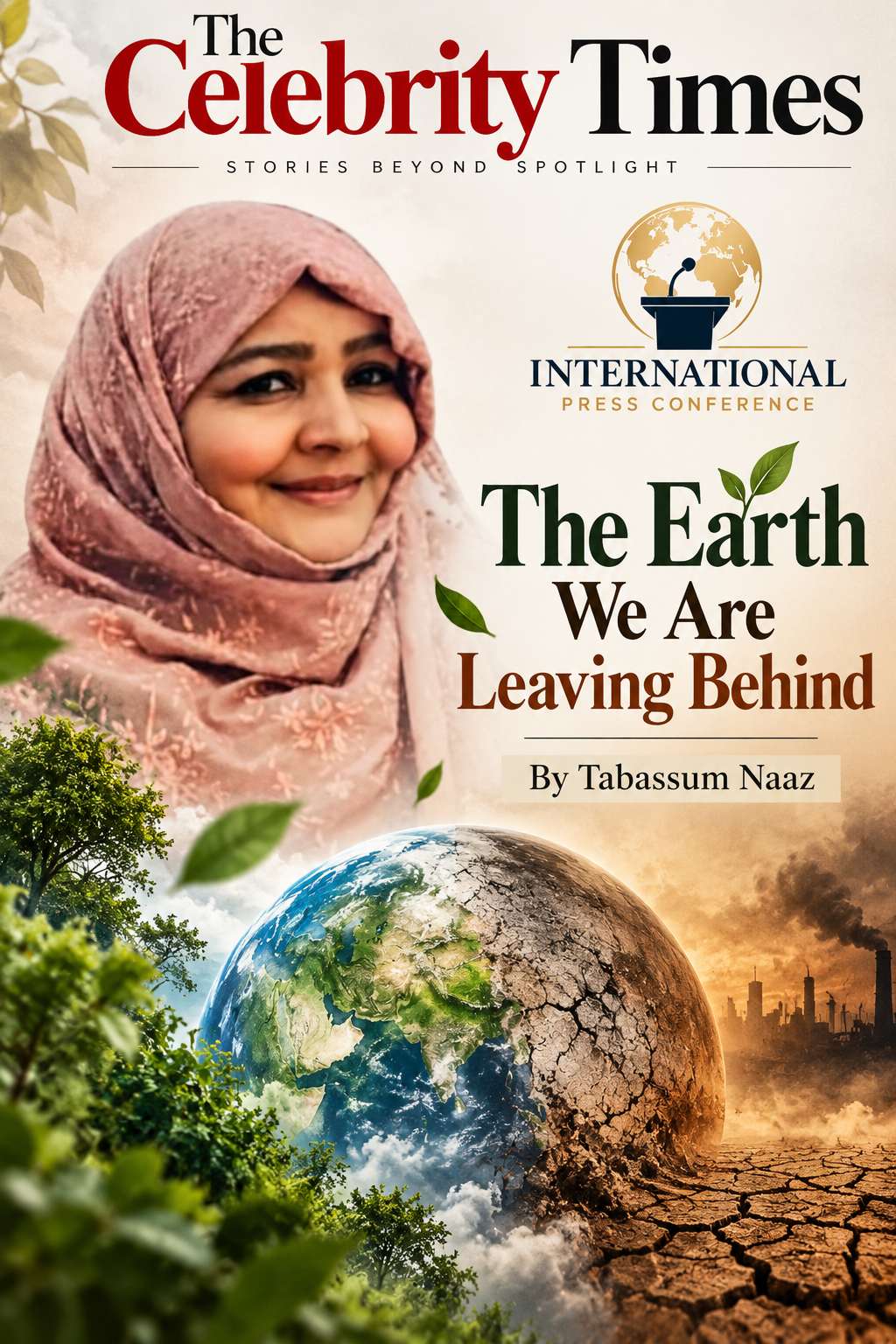
Penned by TABASSUM NAAZ