
Penned by Tabassum Naaz
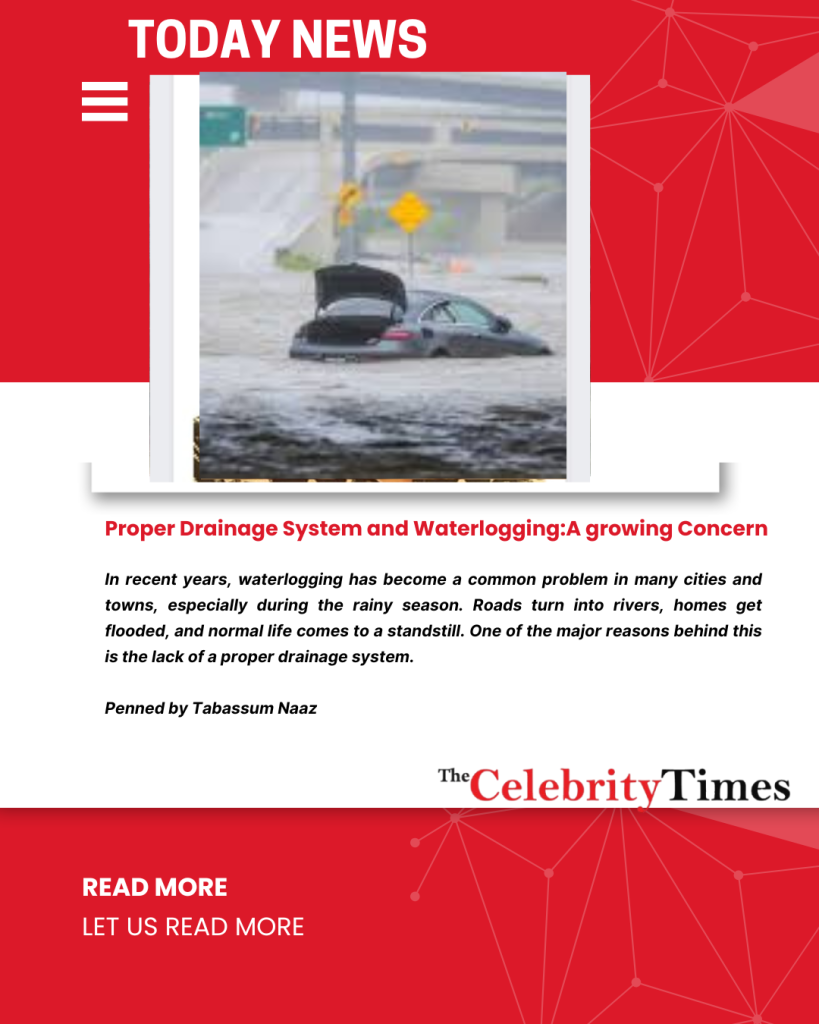
In recent years, waterlogging has become a common problem in many cities and towns, especially during the rainy season. Roads turn into rivers, homes get flooded, and normal life comes to a standstill. One of the major reasons behind this is the lack of a proper drainage system.
Drainage systems are meant to carry rainwater and wastewater away from streets and buildings. But in many places, these drains are either too old, too narrow, or simply blocked with garbage and plastic waste. As a result, water has nowhere to go and starts collecting on roads and in low-lying areas.
The situation becomes worse when people build houses or shops over natural water bodies or drains. This blocks the natural flow of water. Poor planning and rapid construction without proper drainage designs also add to the problem. Sometimes, even a short spell of rain is enough to cause flooding.
Waterlogging doesn’t just cause inconvenience—it leads to bigger problems. Stagnant water becomes a breeding ground for mosquitoes and other insects, leading to diseases like dengue and malaria. Flooded roads cause traffic jams, accidents, and damage to vehicles. It also affects the livelihood of daily wage workers and shopkeepers whose businesses are affected.
So, what can be done?
Firstly, the existing drainage systems need to be repaired and upgraded. Drains should be cleaned regularly, especially before the monsoon. People also need to be more responsible and stop throwing garbage into open drains.
Rainwater harvesting can be promoted to reduce pressure on the drainage system. Building rules should be followed strictly, and illegal constructions over drains must be removed. Authorities should also involve local communities in awareness drives about keeping drains clean and the importance of proper drainage.
In conclusion, waterlogging is not just a seasonal problem—it reflects how well a city is planned and managed. A proper drainage system is essential for public safety, health, and smooth daily life. If we take the right steps now, we can prevent future problems and create a cleaner, safer environment for everyone.