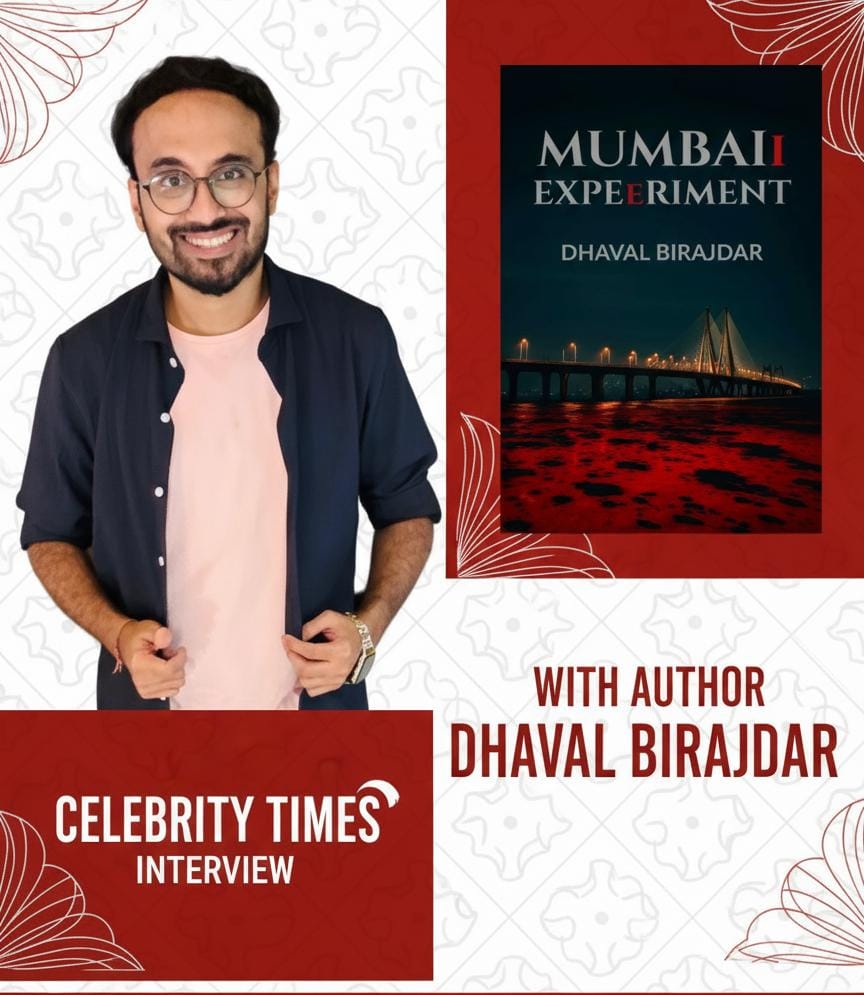
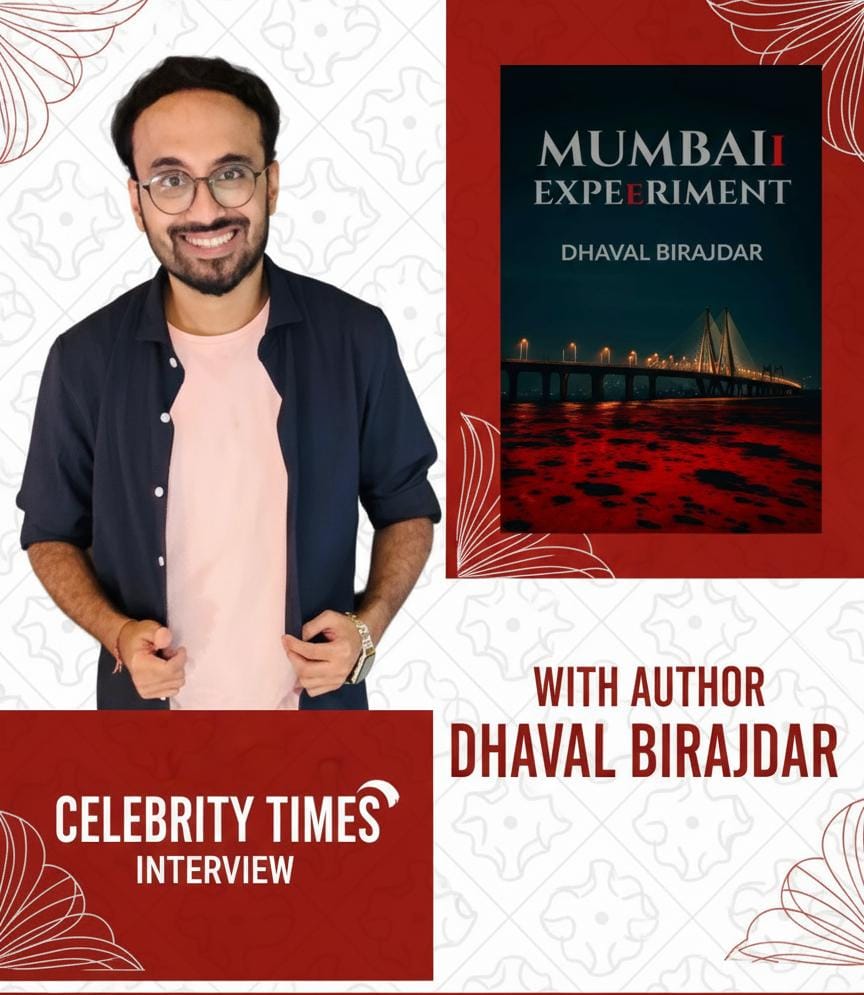
Dhaval Birajdar is not just a writer — he’s a storyteller, educator, and creator who beautifully balances creativity and academia. Currently serving as a professor at DJ Sanghvi College of Engineering, he brings the same passion for learning into his writing. The author of books like Mumbaii Expeeriment, A Knotty Affair, The 3 Musketeers, and 366 Days, Dhaval has built a unique space for himself in the world of literature and education. His stories often reflect deep human emotions, contemporary struggles, and the beauty of everyday experiences. In this candid interview, he opens up about his journey as a writer, his inspirations, and how he manages to keep creativity alive amid a busy academic life.
Q1. Dhaval, could you tell us about your journey from being an educator to becoming a published author?
Answer: I began my journey back when I was a student of engineering. In my earlier years, I had an interesting realisation that when writing long subjective test answers: the capacity to write and construct replies also transfers to the ability to write stories. I use the phrase “In every engineer, there is a writer” as my catchphrase, and it has become my life’s motto since it fascinates me.
Being a writer, I had no trouble expressing myself, connecting with others, and finding meaning in everyday events. Later in my academic career, I realised how teaching and storytelling are related. Both occupations require imagination, accuracy, and compassion. It felt like I was going back to my previous route when I started writing books, from using paper to solve problems to using words to explore my feelings.
Q2. Your books like Mumbaii Expeeriment and A Knotty Affair have interesting titles. What inspired the stories behind them?
Answer: Every title captures a stage of my life and the issues I was delving into at the time. The theme of A Knotty Affair was relationships and the unforeseen ways in which ambition and love can interweave. Mumbaii Expeeriment emerged from seeing the turmoil and resilience of Mumbai itself – a city that experiments with your dreams every single day. I wanted to combine the pulsation of the city with the suspense of a thriller and the fragility of a human heart. Every novel serves as a mirror of the people and events I have come across in some way.
Q3. How do you balance your role as a professor with your passion for writing and content creation?
Answer: Balance is never really perfect; it is more of a rhythm you learn over time. Writing allows me to express myself freely, while my academic schedule helps me stay disciplined. A story’s structure generally develops over the course of the week as I read, think, or even watch news debates which these days are inadvertently funny and frequently serve as a reminder that I could write better screenplays!
The most of my writing is done on the weekends, ideally early on Sundays. Everything is quiet at that point, and I can let my thoughts roam. My best creative moments occur when I am with a notebook, a cup of coffee, and the sunrise. On the weekends, I also construct narratives, edit chapters, and come up with fresh ideas. It is interesting to note that my pupils frequently serve as my inspiration; their enthusiasm, curiosity, and difficulties serve as a reminder that there are stories everywhere you just must pay close attention.
Q4. Among your four books, which one holds a special place in your heart, and why?
Answer:Mumbaii Experience has a very unique place in my heart since it embodies my development as a writer. It combined aspects of crime, emotion, and human psychology, which tested my creativity and emotional limits. Writing it helped me develop patience, tenacity, and self-control, all of which have influenced not only my writing but also my perspective on life.
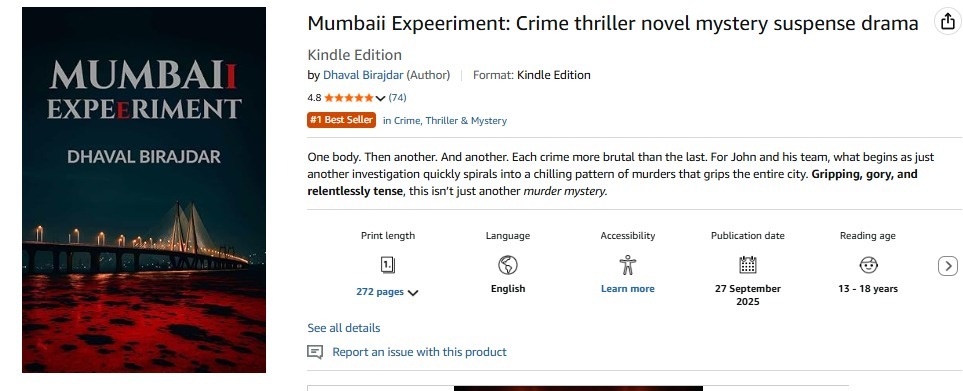
It is my first time doing a print interview, and it feels really good to see the book succeeding. Mumbaii Expeeriment has been one of the best-selling books on Amazon for the last three weeks, and the feedback has been tremendous.
After writing for over ten years, I can see how much my viewpoint and craft have developed. In addition to doing PhD in Mechanical engineering, I read a lot about a variety of topics, including politics, sports, movies, technology, and even fashion. These realms all have an impact on my storytelling in one way or another. They enable me to develop characters that are complex, real, and grounded in contemporary society.
Because it perfectly reflects Mumbai’s essence—unpredictable yet unendingly hopeful, much like life itself—Mumbaii Expeeriment may have struck a profound chord with readers.
Q5. As a teacher and storyteller, do you find that one influences the other? How does teaching impact your writing?
Answer:Indeed, they have a strong bond. I stay aware and grounded as a teacher. Each lecture is a narrative in which you want to inspire, engage, and simplify. My writing naturally reflects that. I frequently compare the emotional depths of storytelling to the human aspect of education. However, writing helps me communicate more sympathetically, which improves my teaching. Beautifully, both worlds nourish one another.
Q6. What kind of themes or messages do you hope readers take away from your books?
Answer: My stories frequently deal with decisions, resiliency, and redemption. I want people to realise that you can always get back on your feet, even in the most difficult circumstances. I examine love, guilt, ambition, and terror through imperfect but realistic characters. The highest satisfaction, in my opinion, is when readers leave my work feeling understood or motivated to seek their own truth.
Q7. What challenges have you faced in your writing journey, and how did you overcome them?
Answer:Consistency was the most difficult thing. Finding undisturbed writing time was difficult because of my personal obligations, research, and teaching responsibilities. However, I discovered that writing requires discipline, just like any other professional duty. Other obstacles included publisher rejections and self-doubt among the creatives. I came to understand that every rejection helps you become a better person. Instead of hurrying, I concentrated on getting better. I now view writing as a lifetime process rather than a competition.
Q8. Lastly, what advice would you give to aspiring writers who are trying to find their voice while juggling a professional career?
Answer: Begin small, but begin today. There is never a “perfect” moment, therefore do not wait for it. Regardless of how flawed it is, write one page every day. Stay true to yourself, read widely, and pay close attention. When you stop copying other people, you will find own voice. Most importantly, show appreciation for your craft. Whether you work as a banker, engineer, or teacher, your most valuable skills are your experiences. Write about them. That is where genuine originality is found.