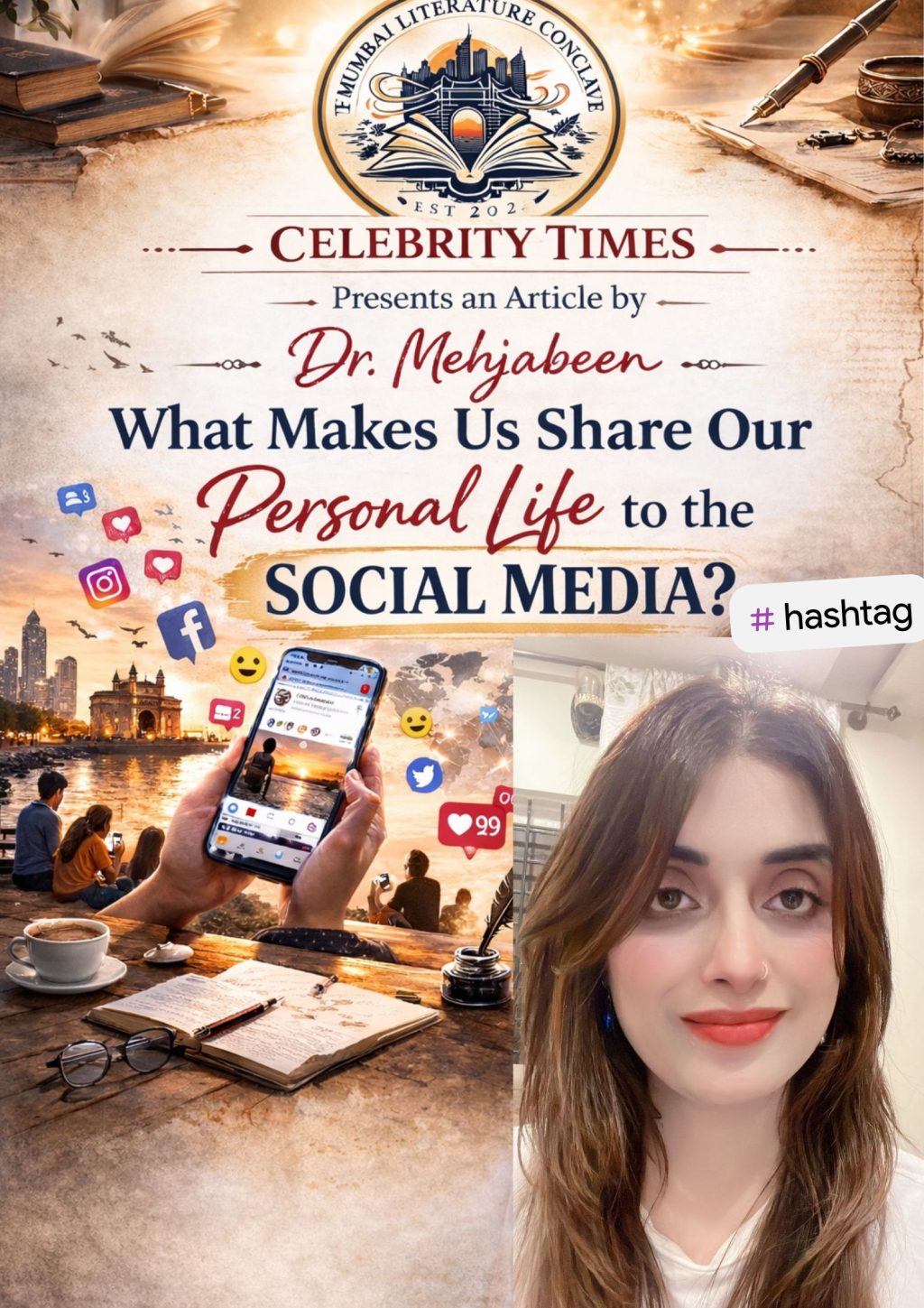
Why is that obsession? Do we compare to celebrities? Is it so ? And why ?
Why we are so obsessed and finally what we get? Stress, comparison, etc
What Makes Us Share Our Personal Life with the Media?
The tendency to share our personal lives with the media is deeply rooted in human psychology and social evolution. Humans are inherently social beings who seek connection, recognition, and belonging. Long before social media existed, people shared stories, emotions, achievements, and struggles within families and communities. Media platforms have simply expanded that circle from a few trusted individuals to a global audience. One major reason people share personal content is the need for validation, the desire to feel valued, acknowledged, and important. When personal moments receive likes, comments, or views, the brain releases dopamine, the “reward chemical,” which creates a feeling of pleasure and acceptance. Over time, this reinforces the habit of sharing, making it feel emotionally rewarding. Additionally, media offers a sense of control over one’s narrative; people can present their lives in a way that feels meaningful, powerful, or admired. For many, sharing becomes a way to express identity, seek emotional support, or fill emotional gaps caused by loneliness, insecurity, or lack of attention in real life.
Why Does This Sharing Turn into an Obsession?
What begins as casual sharing often turns into obsession because of the psychological loop created by instant feedback. Social media platforms are designed to keep users engaged by providing immediate responses, notifications, and visible metrics of popularity. Each like or comment acts as a small reward, conditioning the brain to crave repetition. Gradually, people begin to associate posting with self-worth, feeling good when engagement is high and feeling rejected or anxious when it is low. This cycle can become addictive, similar to behavioral addiction, where individuals feel compelled to check their phones, monitor reactions, or plan content constantly. The obsession is also fueled by fear, fear of being forgotten, ignored, or left behind. In a fast-moving digital world, people worry that if they do not keep sharing, they will lose relevance or connection. This pressure transforms sharing into a psychological necessity rather than a conscious choice.
Do We Compare Ourselves to Celebrities? Is It So?
Yes, comparison with celebrities plays a significant role in this obsession. Celebrities dominate media narratives and represent idealized versions of success, beauty, happiness, relationships, and lifestyle. Constant exposure to their lives creates unrealistic benchmarks for ordinary people. Psychologically, humans naturally engage in social comparison to evaluate their progress and self-worth, but media amplifies this tendency by presenting highly curated and edited realities. Celebrities rarely show their struggles, failures, or vulnerabilities; instead, they display glamour, achievements, and perfection. When individuals compare their everyday lives to these polished images, they often feel inadequate. This comparison pushes people to share their own lives in a way that mirrors celebrity culture—highlighting success, joy, beauty, and achievements while hiding pain and imperfection. In doing so, individuals attempt to bridge the gap between their real selves and the idealized standards promoted by media.
Why Do We Feel the Need to Perform Our Lives Online?
The obsession with sharing is also driven by the idea that visibility equals importance. Media culture subtly teaches that if something is not posted, it does not fully exist or matter. This belief pushes people to document every experience rather than live it. Over time, individuals begin to perform their lives for an audience, making choices based on how they will appear online rather than how they feel internally. Personal experiences become content, emotions become captions, and relationships become displays. This performance creates pressure to maintain a consistent image, leading to emotional exhaustion. The line between authenticity and appearance blurs, and individuals may feel trapped in the persona they have created. The constant need to appear happy, successful, or strong discourages emotional honesty and deep self-reflection.
Why Are We So Obsessed with Media Validation?
Media validation often compensates for unmet emotional needs such as low self-esteem, lack of emotional support, or identity confusion. For many, online approval provides temporary relief from inner emptiness or insecurity. Adolescents and young adults are particularly vulnerable, as their sense of identity is still forming. When validation comes primarily from media, self-worth becomes externally dependent. This dependency weakens emotional resilience, making individuals sensitive to criticism, silence, or rejection. Over time, people may lose the ability to self-validate, constantly seeking reassurance from others. This obsession can also reduce real-life connections, as digital approval replaces genuine emotional intimacy.
What Do We Finally Get from This Obsession? Stress, Comparison, and More
Despite the promise of connection and happiness, excessive sharing often results in stress, anxiety, and emotional dissatisfaction. Constant comparison with others leads to feelings of inadequacy and self-doubt. The pressure to maintain an online image creates mental fatigue and fear of judgment. Privacy loss and overexposure increase vulnerability to criticism and misunderstanding. Instead of feeling fulfilled, individuals may feel emptier after the temporary excitement fades. The obsession shifts focus from inner growth to external approval, weakening self-awareness and emotional balance. What remains is often stress, comparison, insecurity, and a distorted sense of self.
Conclusion
Sharing personal life with the media begins as a natural desire for connection and validation but can gradually turn into an unhealthy obsession driven by comparison, especially with idealized celebrity lives. In the end, instead of lasting happiness, people often gain stress, anxiety, and emotional exhaustion. True well-being lies in conscious media use where sharing is intentional, boundaries are protected, and self-worth is rooted within rather than measured by screens and applause.
Dr Mehjabeen
Founder Vision High Mental Health Wellness
Director Karnataka State Board Mental Health & Human Rights
Women President GHRT
National Director Health & Mental Well Being DASF