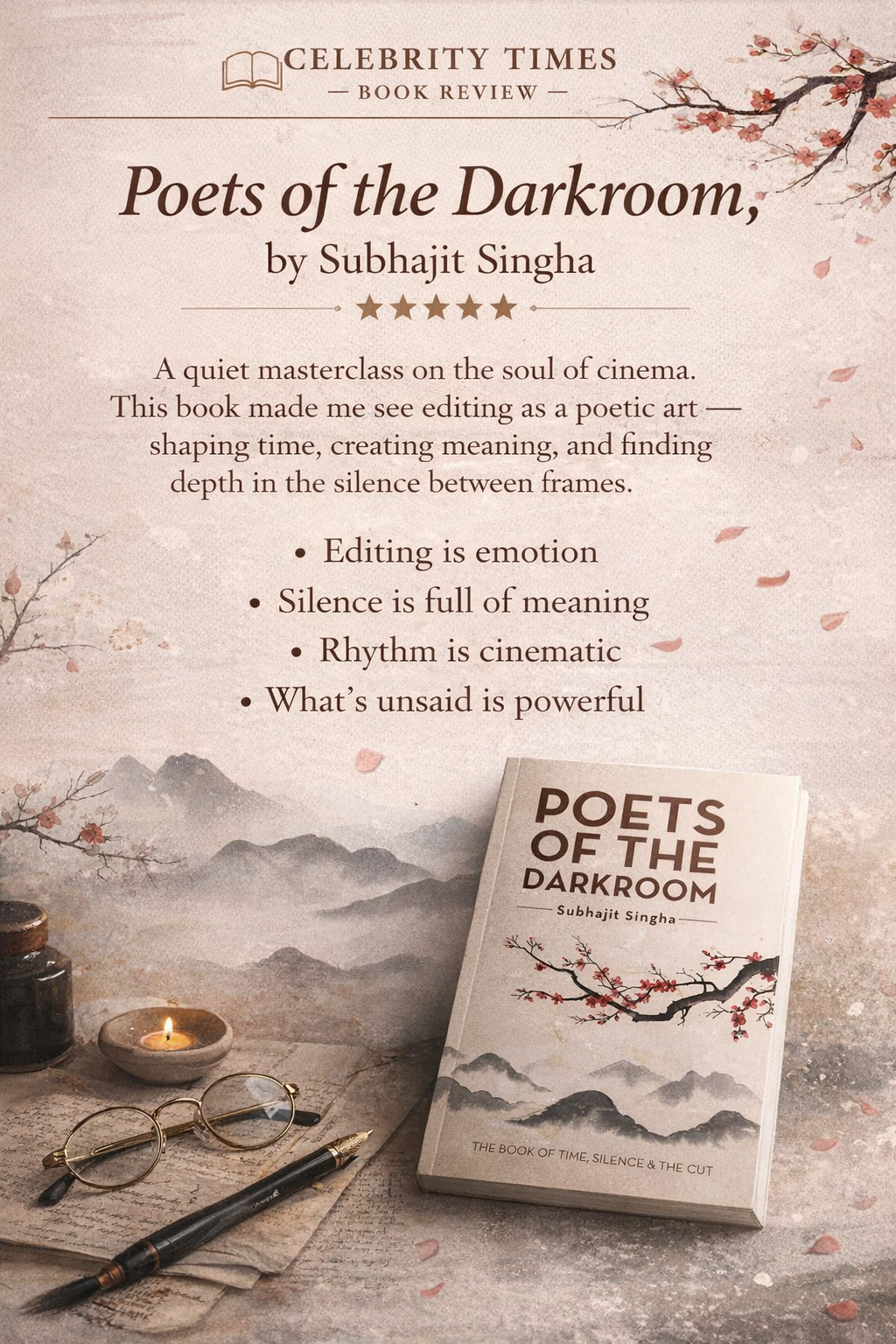
There are some books you read, and there are some books you feel. Poets of the Darkroom by Subhajit Singha belongs to the second kind.
From the very beginning, this book changes the way you look at cinema. It doesn’t talk about editing like a set of rules or techniques. Instead, it shows editing as something deeply human — something that shapes emotion, meaning, and even memory.
What I personally found most interesting is how the book explains time in cinema. It made me realise that time in films is not fixed. A moment can be stretched, slowed down, or even made to feel heavier just by how it is cut. Editing decides not just what we see, but how we feel it. A simple pause can create tension, and a longer silence can make a moment unforgettable.
The way the book talks about silence completely changed my perspective. Silence is not empty here — it is full of meaning. It gives space for emotions to breathe. It allows the audience to think, to feel, and to connect. I never really noticed before how powerful silence can be in films, but now it feels like one of the most important tools.
Another powerful idea in the book is rhythm. Editing is described almost like music — every cut has a beat, every scene has a flow. Sometimes the rhythm is fast and intense, and sometimes it slows down to let emotions settle. This made me understand that editing is not just visual, it is almost physical — you can feel it like a heartbeat while watching a film.
The book also speaks about what happens between shots — the invisible meaning that is not shown directly but is felt by the audience. This was something new for me. It made me realise that storytelling is not only in what is shown on screen, but also in what is left out. The gaps, the pauses, the transitions — they all carry meaning.
What I truly learned from this book is that:
- Editing is not about cutting scenes, but about shaping emotions
- Silence can speak louder than dialogue
- Rhythm controls how a story is experienced
- Meaning often exists in the spaces between images
The writing style is very calm and poetic. It doesn’t rush you. It gives you time to absorb every idea. At times, it feels like you are sitting quietly in a dark room, watching thoughts slowly come together — just like an editor does.
What makes this book even more special is that it is not only for filmmakers. Even if you are someone who simply loves cinema, storytelling, or creative thinking, this book will make you see things differently. It connects cinema with life, emotions, and perception in a very natural way.
If I had to describe this book in one line:
It teaches you how to see what usually goes unseen.
Overall, Poets of the Darkroom is not just a book about editing — it is a book about how stories breathe, pause, and come alive. It is quiet, thoughtful, and deeply meaningful.
And honestly, after reading this, cinema doesn’t feel the same anymore — it feels deeper.