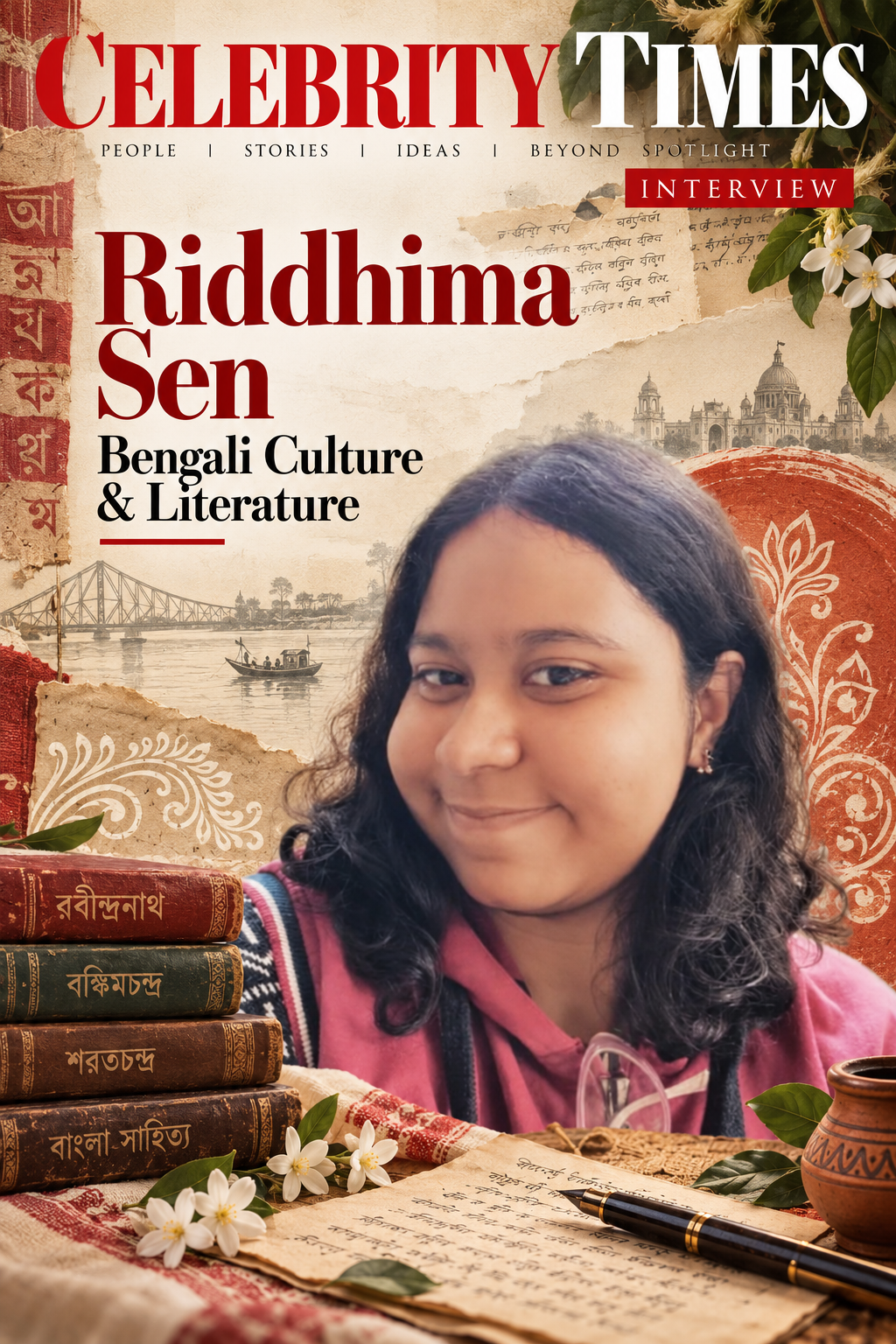
Riddhima Sen — Bengali Culture & Literature
1. Riddhima, as a young author and student, what does being Bengali mean to you personally?
Ans: As a young author and student, being Bengali completes my entire existence. The poems of Kazi Nazrul Islam and the aromatic aloor dum and luchi are my comfort zone on pensive days.
2. Bengali culture is often described as a beautiful blend of literature, music, food, festivals, art and intellectualism. Which aspect of Bengali culture is closest to your heart and why?
Ans: Music and art are the aspects of Bengali culture which are closer to my heart. Listening to songs by Rabindranath Tagore and Kazi Nazrul Islam is like therapy, remedy to a bad day. The art of Nandalal Bose is something every Bengali child is acquainted with since childhood — because of borno porichoy.
3. Your book is titled Mundanity. How do you think the ordinary, everyday life of Bengal can become a source of literary inspiration?
Ans: The ordinary, everyday life of Bengal has always been a source of literary inspiration. Classic texts like Pother Pachali, Aam Aatir Bhepu by Bibhutibhushan Bandopadhyay are based on this very mundane life set in a village. The trilogy is one of my favourite reads of all time.
4. Rabindranath Tagore, Kazi Nazrul Islam, Sarat Chandra Chattopadhyay and Bankim Chandra Chattopadhyay have deeply influenced Bengali literature. Which Bengali writer or literary work has influenced you the most?
Ans: Rabindranath Tagore, Sarat Chandra Chattopadhyay and Kazi Nazrul Islam have influenced me and my imagination (literary) the most.
5. What role do you think Bengali literature continues to play in preserving the cultural identity of Bengalis in today’s digital world?
Ans: With English translations of Bengali literature like Fel7da coming out, Bengali literature still continues to reflect the cultural identity of Bengalis — who can forget the iconic smoking pipe of Prodosh Mitter?
6. Bengali culture has a strong tradition of adda. Do you think the culture of sitting together, discussing literature, politics, cinema and everyday life is slowly disappearing among the younger generation?
Ans: Bengali culture has a strong tradition of adda. With a digital boom, the culture of sitting together, discussing literature, politics, cinema and everyday life is slowly disappearing among the younger generation.
7. Durga Puja is much more than a religious festival in Bengal. What does Durga Puja mean to you beyond the rituals and celebrations?
Ans: Durga Puja is much more than just a religious festival in Bengal. For me, Durga Puja has always been about meeting friends and cousins. However, it also reminds me each year how women are not worshipped in real life but as a mud statue. The dichotomy is insane.
8. From Poila Boishakh to Durga Puja, Saraswati Puja to Poush Parbon, Bengal has a rich calendar of celebrations. Which Bengali festival holds a special place in your heart?
Ans: Saraswati Pujo holds a special place in my heart. Every year, there is a puja held in our home. I go out post the Puja to meet my friends nearby. The best part of it is dressing up, wearing a saree or rather styling it elegantly.
9. Bengali cuisine is an important part of the culture. What is your favourite Bengali dish, and is there any food memory from your childhood that you would like to preserve forever?
Ans: My favourite Bengali dish is luchi and aloor dum. When I was younger, I used to eat ghugni made by my maternal grandmother. It was my comfort food in childhood. I would like to preserve that memory forever.
10. How important do you think the Bengali language is in keeping the cultural identity of the younger generation alive?
Ans: Without knowing one’s mother language, it gets really difficult to know our literature and history, aspects which shape us and our world views.
11. With English and Hindi becoming increasingly dominant among urban youth, do you think young Bengalis are losing touch with their mother tongue?
Ans: Definitely. My own first language was English in school. Bengali was second. All languages throughout the nation are important, since India is a diverse nation and there can be no fixed national language as such.