“A woman should not have to learn the language of fear before she learns the language of freedom.”
Women’s safety is something we talk about often, but usually after something unfortunate has happened. There is anger, there are discussions, there are demands for action, and then, after some time, the conversation becomes quiet again. But the fear does not always disappear for the woman who has experienced it.
Many women know this fear in small, everyday ways. They think twice before travelling alone. They check who is walking behind them. They call someone while returning home late. They share their location with family. Sometimes, they even change their plans simply because a place or a time does not feel safe.
I feel that women’s safety should not mean teaching women to live carefully every moment. It should mean creating an environment where women can live normally, without constantly thinking about what might happen to them.
Safety begins at home and in childhood.
Girls are often told, “Be careful.” They are told not to go out alone, not to come home late and not to trust strangers. These precautions may sometimes be necessary, but I also feel that boys need to be taught equally important lessons—how to respect women, understand boundaries, accept “no” and behave responsibly.
“Teaching a girl to protect herself is important; teaching society to respect her is even more important.”
Education can make a real difference. Children should learn about personal boundaries, consent and inappropriate behaviour in ways they can understand. A girl should know that she has the right to say no and speak when something makes her uncomfortable. A boy should understand that respect is not optional and that another person’s boundaries must always be respected.
Public places also need to become safer. Proper lighting on roads, safer public transport, functioning CCTV systems and accessible emergency services can help women feel more secure. But these facilities are useful only when there is a proper response behind them. A woman who seeks help should not feel that she has to explain or prove everything before someone takes her seriously.
Financial independence is another important part of empowerment. Education and employment can give women confidence and the ability to make their own decisions. Money cannot solve every problem, but having one’s own income can give a woman more choices when she finds herself in a difficult situation.
We also need to change the way we react when a woman speaks about harassment or abuse.
Too often, people ask questions like, “Why was she there?” “Why was she alone?” or “Why did she trust that person?” Sometimes even the clothes she was wearing become a topic of discussion.
I believe the first question should simply be, “Are you safe? How can I help you?”
The responsibility should not be shifted onto the person who has already suffered.
Families have a major role to play too. A daughter should feel that she can tell her parents about something uncomfortable without immediately being blamed or judged. A mother should be able to teach her daughter awareness without making her believe that the entire world is dangerous.
Women can also support women. A phone call to check whether a friend reached home safely, walking someone to her vehicle, helping a colleague who feels uncomfortable, or speaking up when we see something wrong may seem like small things, but sometimes small acts of support matter greatly.
“Sometimes safety begins with something as simple as one woman refusing to leave another woman alone.”
At the same time, women should not be made solely responsible for their own safety. They cannot be expected to carry pepper spray, learn self-defence, track their location and remain alert every second while society does nothing about the behaviour that creates the danger.
There must be effective laws, proper implementation, sensitive handling of complaints and accountability. Schools, workplaces, public institutions and communities all have a responsibility to create an atmosphere where inappropriate behaviour is not ignored.
Technology can also help. Emergency apps, location sharing and helplines can provide support when needed. But technology should be a tool for safety, not a substitute for responsible people and functioning systems.
For me, the real goal is not to make women afraid of the world or suspicious of everyone around them. The goal is to make them confident enough to live their lives freely and wisely.
Let girls receive education. Let women know their rights. Let them learn self-defence. Let them become financially independent. But at the same time, let us raise boys with values, respect and a clear understanding of boundaries.
Women’s safety is not only about women. It is about the kind of society we want to create for everyone.
Change will not happen overnight. It will begin with conversations at home, lessons in schools, responsible behaviour in public places and people having the courage to speak when something is wrong.
A woman should not have to become fearless before she can feel safe.
She should simply be able to live with dignity, confidence and freedom.
“A truly safe society is one where a woman can live her life without constantly planning how to protect herself.”
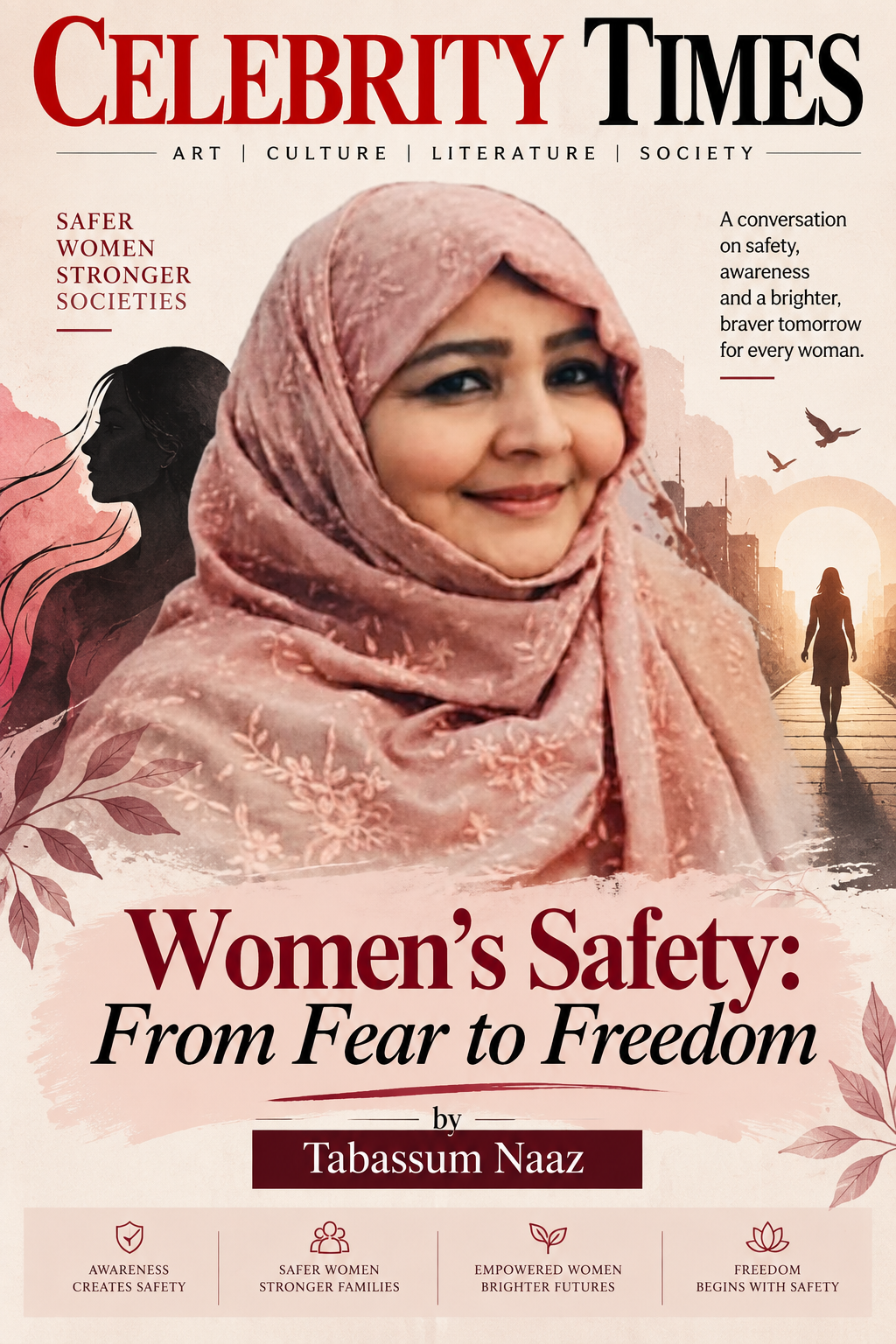
Penned by TABASSUM NAAZ