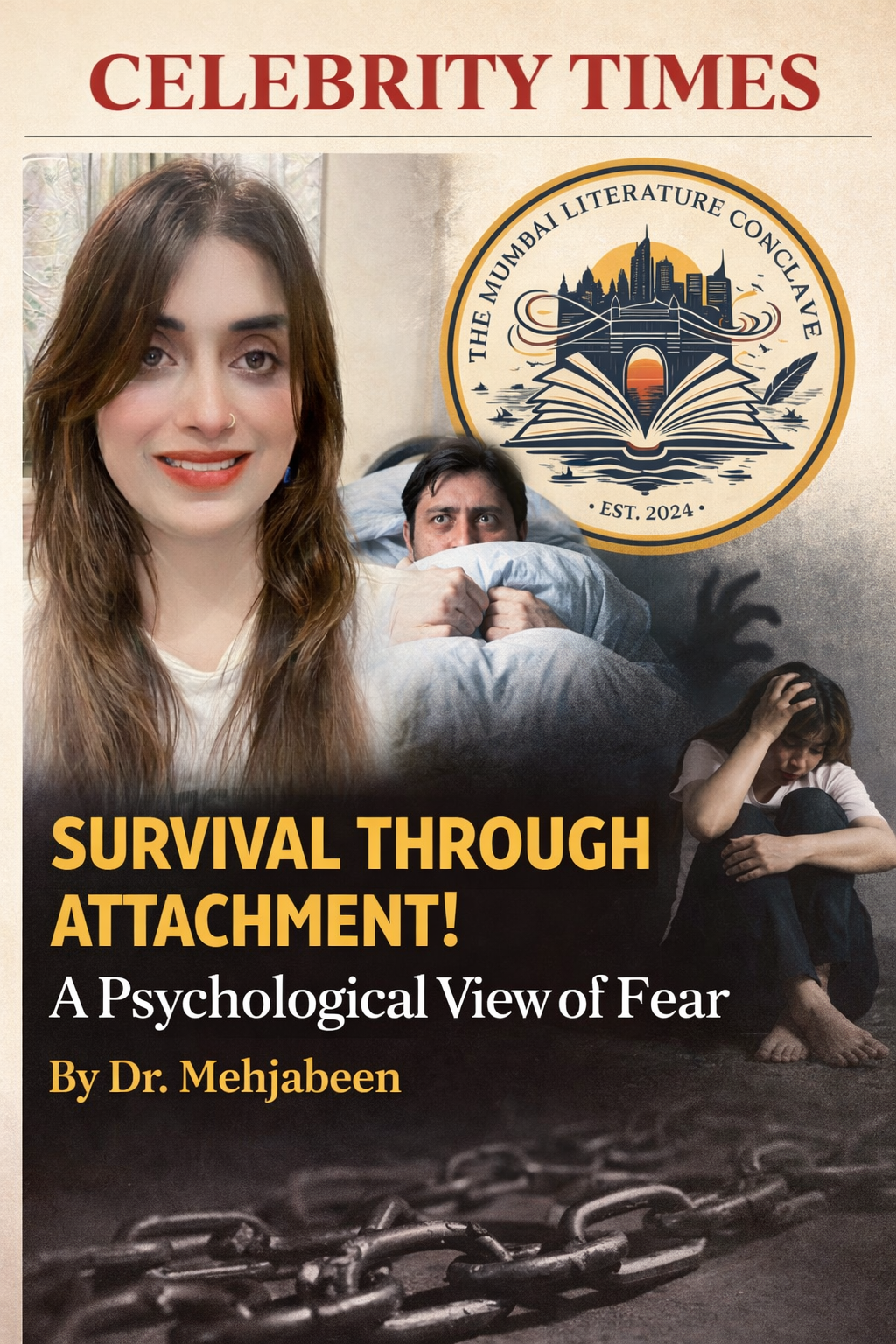
Human beings often choose certain “objects” in life sometimes people, sometimes beliefs, sometimes memories, sometimes rituals to help them overcome fear. These selected objects may not always be physical things; they can be a mentor’s presence, a sacred symbol, a childhood story, a comforting routine, or even a self-created assumption that “everything will be fine.” Psychologically, this is not weakness; it is a coping mechanism. When fear threatens our emotional stability, the mind searches for an anchor. A child may hold a toy to feel safe in the dark. An adult may hold onto faith, a relationship, a title, or a success story to feel secure in uncertainty. These selected objects become emotional stabilizers. They give structure to chaos. They provide a sense of control in situations where control is limited. In counselling practice, it is often observed that individuals unconsciously attach their courage to something external before they learn to discover it internally. The selected object becomes a bridge between vulnerability and resilience. It is not the object itself that removes fear; rather, it is the meaning we attach to it that empowers us.
When we speak of “selected objects,” we must understand they vary widely. For some, it is a person, a parent, partner, teacher, therapist, or spiritual guide whose presence reduces anxiety. For others, it is an achievement, a degree, a position, or financial security that provides confidence. Some rely on spiritual symbols, prayer beads, holy books, or rituals to calm their minds. Others create internal stories: “I am strong,” “This will pass,” or nothing wrong to say “God is with me.” Still there are many sources god has created and we humans Do not utilise in a Better way to overcome just easy ways we find to get rid of things, Even avoidance can become a selected object; some people avoid situations to temporarily overcome fear. These choices are not random. They are deeply connected to our past experiences, attachment patterns, and personality structure. A person who felt unsupported in childhood may depend heavily on relationships. Someone who faced instability may depend on money or status. A spiritually inclined individual may depend on faith practices. Each selected object serves a psychological function, it reduces perceived threat and increases perceived safety. However, the important question is: does it truly eliminate fear, or does it only help us cope with it temporarily?
It is possible to overcome fears, but the process is complex. True overcoming requires self-awareness, emotional regulation, cognitive restructuring, and sometimes therapeutic intervention. Many individuals are aware of their fears and even understand their irrational nature, yet they continue to act in ways that reinforce them. This is where the paradox of human behaviour appears we know, yet we behave as though we do not know. A person may understand that public speaking is not life-threatening, yet their body reacts with trembling and avoidance. Someone may know that a relationship is unhealthy, yet they remain attached. Awareness alone does not equal transformation. Fear is not just a thought; it is stored in the nervous system. It is conditioned through repeated experiences. Therefore, overcoming requires more than intellectual understanding; it requires emotional processing and behavioral change. We often act “like a fool,” not because we lack intelligence, but because fear operates from a deeper psychological layer. Until we retrain our responses, our awareness remains theoretical rather than practical.
Not everyone overcomes fear in the same way. Strong-minded individuals are not those who never feel fear; they are those who acknowledge it and still move forward. Some people may not completely eliminate their fears, but they learn to cope effectively. Coping is not failure; it is adaptation. For example, a person with social anxiety may never become extremely extroverted, but they can learn strategies to function confidently in social settings. A trauma survivor may always remember the painful event, but through therapy and support, they can reduce its emotional intensity. Strength is not measured by the absence of vulnerability but by the ability to regulate it. However, it is also true that not everyone develops this strength Environmental factors, support systems, personality traits, and mental health conditions influence one’s ability to overcome fear. Some individuals remain dependent on their selected objects for a lifetime. Others gradually internalise the strength that those objects symbolised. The journey from dependence to independence is gradual and deeply personal.
Ultimately, the goal is not to reject selected objects but to understand them. They are stepping stones, not permanent crutches. When we recognise why we depend on certain people, beliefs, or situations, we gain insight into our emotional needs. That insight becomes the beginning of genuine growth. Fear is a natural human emotion; it protects us from danger. But when it controls our decisions, limits our potential, or defines our identity, it must be gently challenged. Through counselling, reflection, spiritual growth, and conscious effort, we can shift from external reliance to internal stability. We can move from coping to overcoming. We can transform fear from a master into a messenger.
Conclusion
In life, we all select objects visible or invisible to feel safe against our fears. These choices reflect our emotional history and psychological structure. While they may help us cope, true overcoming requires deeper inner work. Awareness alone is not enough; transformation demands practice, courage, and sometimes guidance. Strong minds are not fearless minds,they are regulated minds. When we learn to internalise the strength we once learned from outside sources, we begin to live with authenticity and inner strength . Fear may exist, and it is part of our lives let us accept peacefully and focus on our self to create wonders.
Dr Mehjabeen
Founder Vision High Mental Health Wellness
Director Karnataka State Board Mental Health & Human Rights
Women President GHRT
National Director Health & Mental Well Being DASF