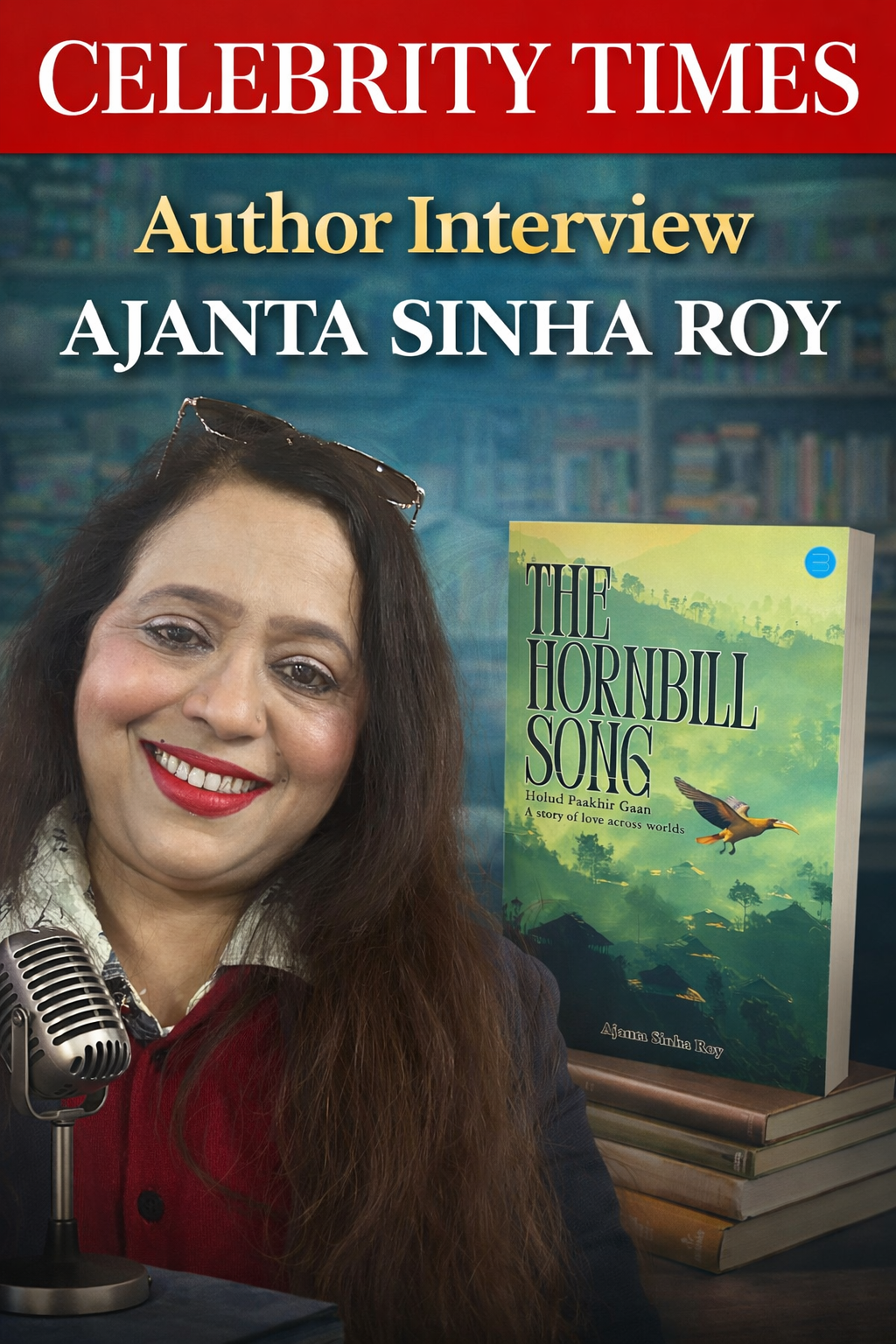
Ajanta Sinha Roy is an acclaimed educator, author, and cultural advocate with an MA in English (Gold Medalist), an M.Phil in Education, and a digital marketing certification from IIM Indore. As the founder of Vidya.Com and former principal of the Assam Rifles Nodal School in Nagaland, along with other reputed CBSE institutions across India, she brings a wealth of academic and administrative experience.
Having spent years in Kohima as a defence officer’s wife, Ajanta gained deep insight into the vibrant cultures of Northeast India. Her lived experiences among Naga communities profoundly shape her writing. Passionate about authentic representation, she strives to bridge cultural gaps and highlight voices often underrepresented in mainstream Indian literature.
Her solo book, The Hornbill Song, is a heartfelt tribute to the Northeast, exploring themes of love, identity, and belonging with sensitivity and depth.
1. What inspired you to transition into writing, and how did your academic background influence your storytelling?
My transition into writing wasn’t so much a change of direction as it was an evolution. After three decades in education, I realized that while textbooks teach facts, stories teach empathy. My academic background—being a Gold Medalist in English and an M.Phil in Education—provided the technical scaffolding, but my years as a Principal taught me the human element. Storytelling, for me, is the ultimate classroom; it’s where I can continue to mentor and bridge cultural gaps on a global scale.
2. How did your firsthand experiences in Kohima shape the narrative and themes of The Hornbill Song?
Living in Kohima as a defense officer’s wife wasn’t just a residency; it was an immersion. I didn’t just see the hills; I heard their songs, felt the rhythm of the community, and witnessed the unspoken prejudices that often exist between the ‘hills’ and the ‘plains.’ These lived experiences shaped The Hornbill Song into more than a romance—it became a vehicle to showcase the vibrant, nuanced reality of Naga culture that is so often missing from mainstream Indian discourse.
3. Which of the themes—identity, love, or belonging—resonates most deeply with you personally, and why?
Belonging resonates most deeply. As someone who moved across diverse landscapes of India, I’ve often asked: Where is home? Is it where you are born, or where your heart takes root? In the book, Priya’s struggle to find a home between her orthodox Bengali roots and her life in Nagaland reflects my own ‘Blooming Within’ philosophy—that true belonging is found internally, through the courage to embrace our own authentic identity.
4. What challenges did you face while portraying Northeast Indian communities in your writing?
The greatest challenge was the weight of responsibility—the fear of ‘tokenism.’ I wanted to ensure I wasn’t just describing the Northeast as an exotic backdrop, but as a living, breathing character. Portraying the cultural nuances of the Angami community while being a Bengali author required deep sensitivity. I had to constantly check my own biases to ensure that every custom, every word of dialect, and every emotional reaction felt earned and authentic.
5. How do you think literature can help bridge cultural divides and challenge stereotypes in a country as diverse as India?
Literature is a mirror and a window. It allows us to see ourselves and look into the lives of others. In a country as vast as India, stereotypes are born from a lack of proximity. When a reader in Delhi or Bangalore reads about a family in Kohima and feels their pain or joy, the ‘otherness’ disappears. Stories humanize the statistics; they turn ‘them’ into ‘us.’ That is the only way to truly bridge a divide.
6. Can you share a particular moment from Nagaland that became a turning point or inspiration for your book?
I remember a specific morning in a Kohima courtyard when I saw a bird—not a hornbill, but the way the light hit its wings made the whole world seem to pause. It was a moment of profound peace amidst a history of conflict. That silence, that ‘symphony of faiths’ I describe in the book, where a house could hold both a puja and a Christmas carol, was the seed. I wanted to capture how love can survive in the cracks of even the most rigid social structures.
7. What message do you hope readers take away from The Hornbill Song?
I hope readers walk away with the realization that cultural differences are not barriers, but textures that make the fabric of our lives richer. I want them to understand that love requires sacrifice, but it also provides the greatest liberation. Most importantly, for those unfamiliar with the Northeast, I want them to close the book feeling like they’ve finally visited a part of their own home they never knew existed.