
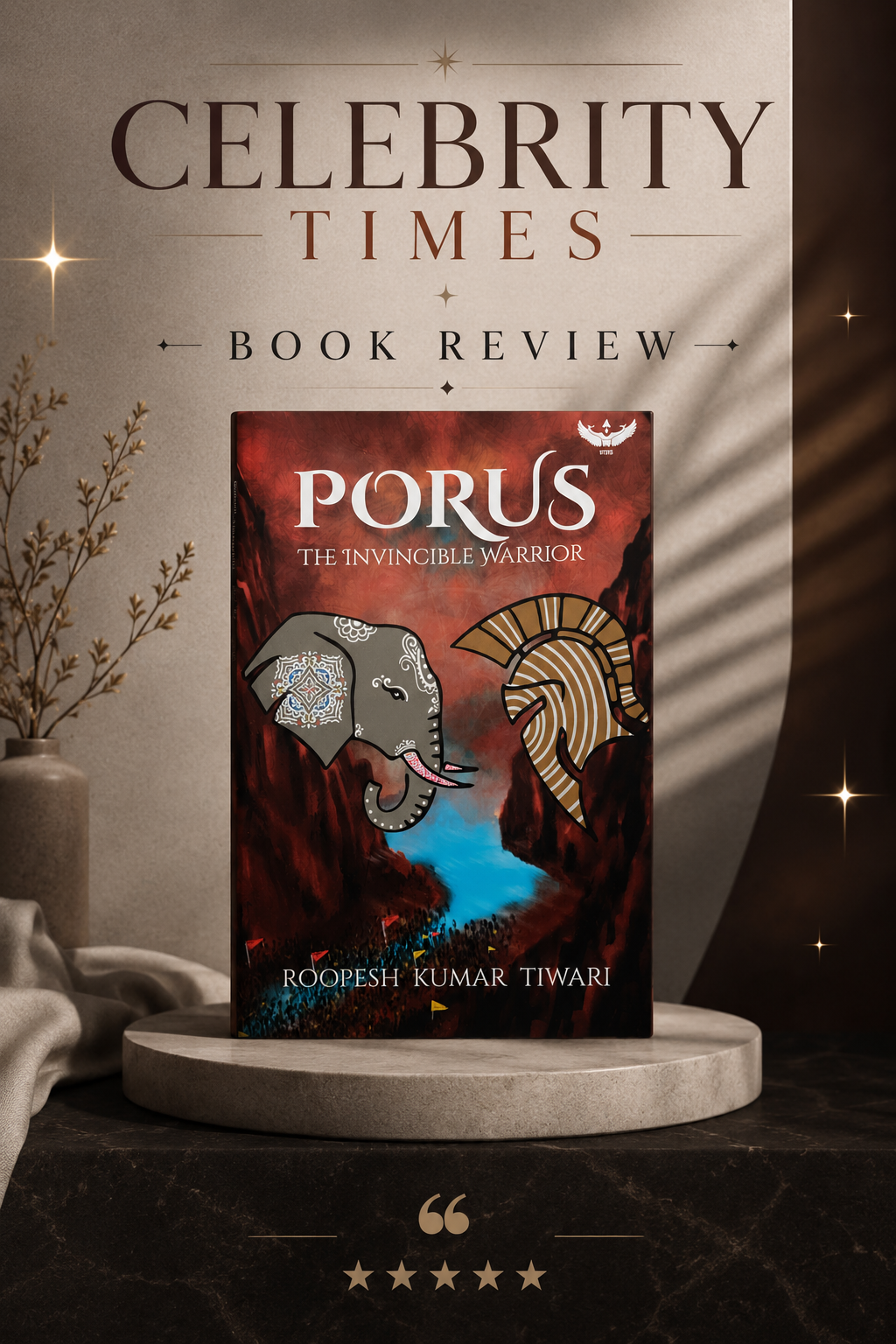
Historical fiction becomes truly memorable when it balances history with emotion, and Porus succeeds in doing exactly that. Set during the time of Alexander’s expansion and the political unrest across Persia and ancient India, the novel combines war, betrayal, ambition, and personal loss into a gripping narrative.
The story follows several interconnected characters, but the emotional core of the novel lies with Purushottam, or Porus, and Vikrodhana, later known as Chandragupta. Both characters are shaped by tragedy, betrayal, and the desire for justice. Their journeys give the story emotional depth beyond its large-scale battles and political conflicts.
One of the strongest aspects of the novel is its character writing. Porus is presented not simply as a heroic king, but as a man carrying grief, anger, and responsibility. Chandragupta’s transformation from a wounded young boy into a determined figure is also handled well. The novel shows how pain and loss slowly shape his ambition and purpose.
Alexander is another standout character in the book. The author portrays him as fearless, ambitious, and intelligent, while also revealing his pride and obsession with victory. The siege of Gaza becomes one of the most engaging sections of the novel, filled with tension, strategy, and intense battle sequences.
The Persian storyline also adds emotional and political complexity to the narrative. Characters like Darius and Amytis are written with emotional depth, showing the fear, uncertainty, and personal struggles inside a collapsing empire.
The novel handles political intrigue effectively. Betrayals, secret alliances, revenge plots, and shifting loyalties keep the narrative engaging throughout. The palace conspiracies and hidden agendas create suspense without making the story overly complicated.
Another major strength of Porus is its emotional side. The book constantly reminds readers that behind every war are people carrying grief, guilt, hope, and emotional scars. The emotional moments involving family loss, sacrifice, and betrayal feel sincere and human.
The battle scenes are vivid and cinematic without becoming confusing. The author describes warfare with enough detail to make the action exciting while still keeping the focus on the characters and their emotions.
The writing style is simple and accessible, making the book easy to follow even for readers who are not regular fans of historical fiction. At the same time, the descriptions of kingdoms, courts, and battlefields help bring the ancient world to life.
The novel explores themes of revenge, loyalty, leadership, ambition, identity, and the human cost of war. These themes give the story emotional weight and make it more than just a historical adventure.
While the large number of characters may feel slightly overwhelming at first, the story becomes easier to follow as the narrative progresses. The pacing is mostly balanced, with a good mix of emotional moments, political drama, and action.
Final Verdict
Porus is an ambitious historical novel that successfully combines war, politics, emotion, and human drama into one gripping narrative. It is a book that appeals not only to readers who enjoy history, but also to anyone who loves stories about courage, betrayal, ambition, and destiny.
The novel’s greatest achievement is that it never forgets the humanity behind its historical figures. Kings, warriors, scholars, queens, and soldiers are all presented as people carrying emotional wounds and personal dreams.
With its strong characters, emotional storytelling, vivid battle scenes, and immersive historical atmosphere, Porus delivers a memorable reading experience.
For readers who enjoy historical fiction filled with action, political intrigue, emotional depth, and larger-than-life characters, this book is definitely worth reading.
Rating: 4.5/5
A powerful and emotionally engaging historical epic that brings ancient history to life through strong storytelling and memorable characters.