
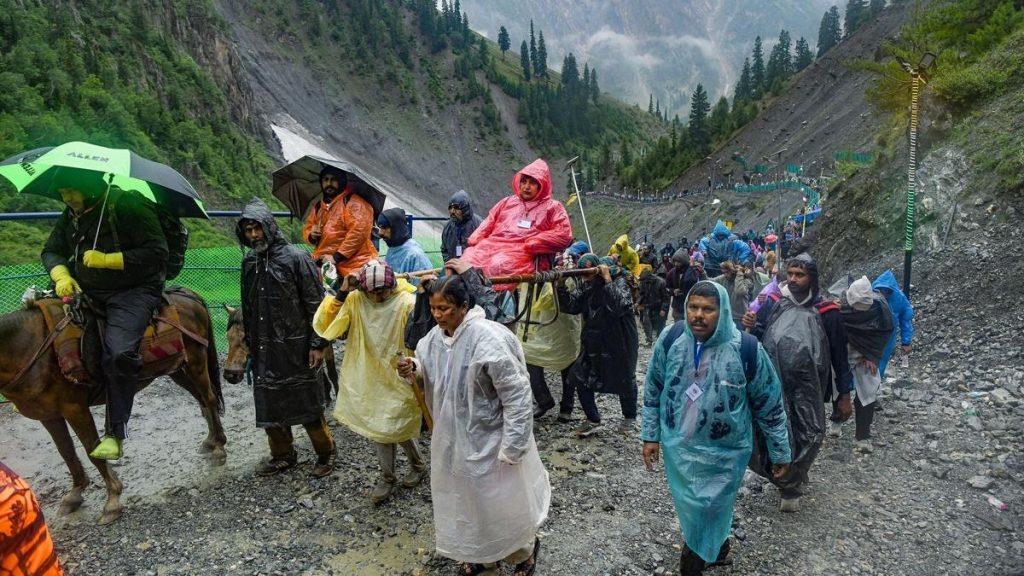
The annual Amarnath Yatra will be suspended from August 9 on both major pilgrimage routes leading to the holy cave shrine in Jammu and Kashmir.
Authorities have cited recent rainfall, damage to vulnerable stretches of the pilgrimage tracks and forecasts of adverse weather as the reasons for the decision. Restoration and repair work is being undertaken to improve safety for pilgrims.
The suspension affects both the Pahalgam and Baltal routes, the two principal approaches used by pilgrims travelling to the Amarnath cave.
Officials have been closely monitoring weather and ground conditions because heavy rainfall in the mountainous terrain can make trekking routes unstable and increase the risk of landslides, slippery paths and other hazards.
Pilgrimage to continue through traditional rituals
Despite the suspension of the regular pilgrimage, the annual religious rituals will continue.
According to reports, Chadi Mubarak, the traditional holy mace associated with the Amarnath pilgrimage, is scheduled to proceed through the traditional Pahalgam route as part of the culmination of the pilgrimage.
The temporary suspension therefore does not represent the cancellation of the religious observance itself. Rather, it is primarily a safety and infrastructure measure affecting regular pilgrim movement.
More than 4.8 lakh pilgrims have already visited
The decision comes after a large number of devotees had already undertaken the pilgrimage this year. Reports indicate that more than 4.8 lakh pilgrims had performed darshan at the holy shrine before the latest suspension announcement.
Authorities are expected to focus on repairing vulnerable sections of the tracks and assessing weather conditions before determining whether regular movement can resume.
Why the suspension matters
The Amarnath Yatra is one of India’s largest annual religious pilgrimages and requires extensive coordination among civil administration, security forces, medical teams, disaster-response personnel and shrine authorities.
The mountainous geography makes weather a critical factor. A temporary suspension can therefore be viewed as a preventive measure intended to reduce risks to pilgrims and allow damaged infrastructure to be restored.