“Writing is not only about finding the right words. It is about finding the words that belong to you.”
We are living in an age where technology is changing very quickly. Artificial Intelligence has entered almost every field, and writing is no exception. Today, an article, poem, story or even a book can be created within minutes with the help of AI. It is fascinating, useful and sometimes even surprising. But for a writer, it also brings a new set of challenges.
As someone who has been writing since the age of eighteen, I have seen my own writing journey develop slowly. I did not become a writer overnight. There were years of reading, observing people, experiencing life, writing, rewriting and sometimes keeping my words to myself. Gradually, my poems found their way into anthologies, magazines and books. I have also had the opportunity to receive recognition for my writing. Every publication and every appreciation has encouraged me to continue.
That is why the arrival of AI makes me think deeply about what it really means to be an author today.
One of the biggest challenges is originality.
AI can produce beautiful sentences almost instantly. It can suggest titles, improve grammar and even write poems and articles. But a writer’s real strength is not simply in using beautiful words. It is in having something genuine to say.
A poem about pain is not powerful merely because the words are beautiful. It becomes powerful when the writer has understood pain. An article about hope becomes meaningful when the writer knows what it means to hold on to hope during difficult times.
“AI can arrange words beautifully, but only a human being can give those words a lived experience.”
This is where I feel an author’s personal journey becomes important.
My writing has always been connected with emotions and life. I write about relationships, sorrow, resilience, healing, self-love, silence and the strength that people often hide behind a smile. Some of these emotions have come from observing others, while some have come from my own experiences. When I write, I do not simply search for words. I search for the feeling behind those words.
That cannot be copied from a prompt.
My own journey has taught me that writing does not happen in isolation. It grows from life. Every poem I write carries something of what I have seen, felt, understood or learned. My publications in different anthologies and the recognition I have received over the years have encouraged me, but the greatest satisfaction still comes when someone tells me, “Your words expressed what I could not say.”
That connection cannot be measured by technology.
Another challenge is trust. Today, whenever a piece of writing is exceptionally polished, there may be a question about whether it was written by a person or generated by AI. This can be uncomfortable for genuine writers too. A writer who has spent years developing a personal style may sometimes feel that his or her own work has to prove its authenticity.
For me, writing has never been about producing perfect sentences. Sometimes a simple sentence can carry more emotion than a complicated one.
There is also a concern that AI may make people undervalue the effort involved in writing. When a machine can produce a poem in seconds, people may forget that a writer can spend hours, days or even months thinking about a single piece.
But writing is not a race.
An author does not need to compete with the speed of a machine.
“A machine may write in seconds; a writer may take years to become the person behind those words.”
“A machine may know the meaning of a word, but an author knows the reason behind it.”
At the same time, I do not believe that writers should fear technology. AI can be a useful tool when used responsibly. It can help with research, grammar, ideas and organisation. There is nothing wrong with learning to use new technology. The important thing is that the writer should remain the thinker, the creator and the voice behind the work.
Technology should assist creativity, not replace it.
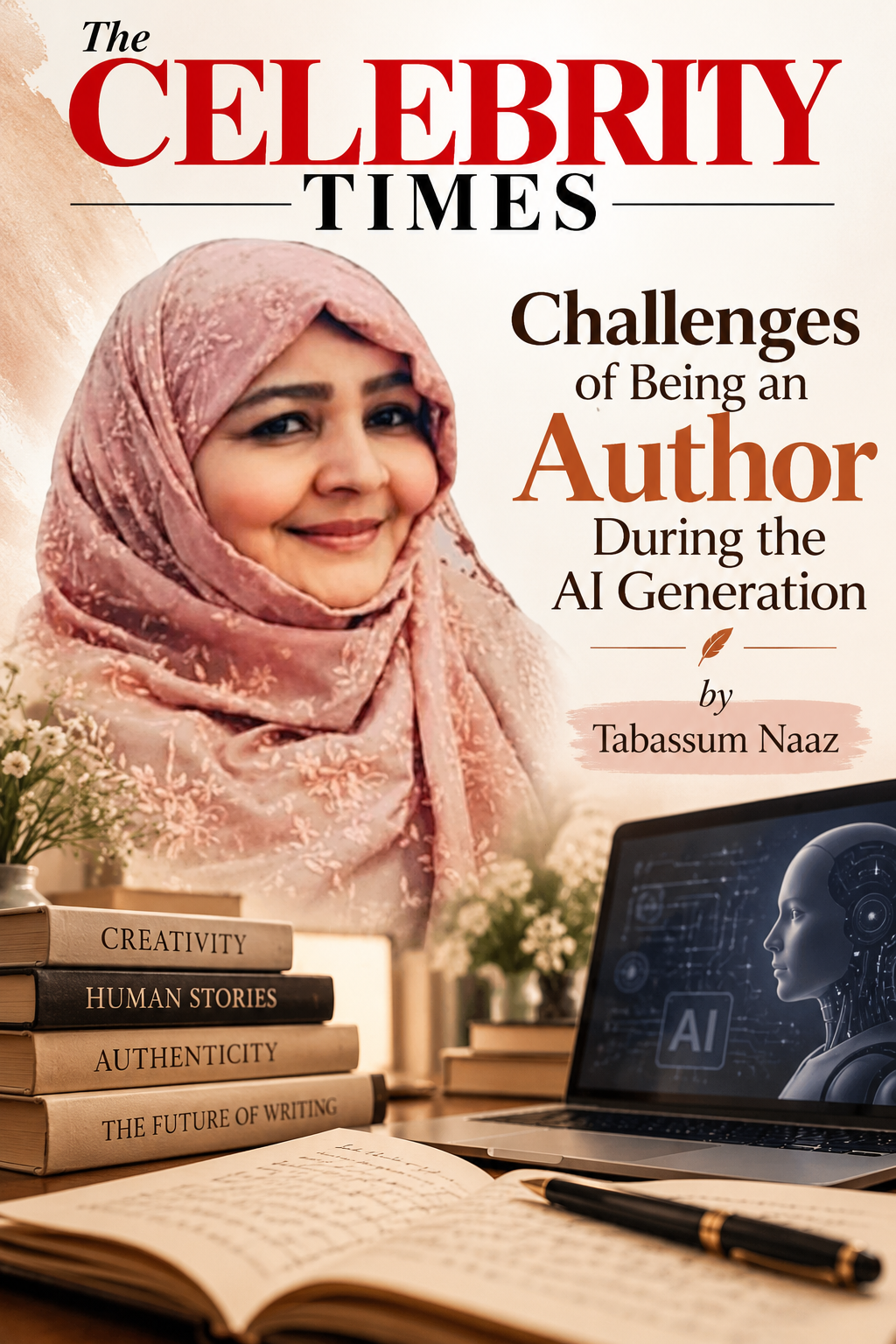
For me, the greatest challenge in the AI generation is therefore not AI itself. It is the responsibility of every writer to protect his or her own voice.
As authors, we must continue reading, observing, thinking and experiencing life. We must write from our own understanding. We must not become so dependent on technology that we forget how to sit quietly with our thoughts and allow our own words to emerge.
I have learned during my journey that recognition is wonderful, but what matters even more is the connection between a writer and a reader. When someone tells me that a poem touched their heart or that an article expressed something they could not say themselves, I feel that my writing has served its purpose.
That connection is deeply human.
Perhaps the future of writing will belong to both humans and technology. AI will continue to develop, and writers will have to learn how to work alongside it. But I hope that even in this fast-changing world, readers will continue to look for something that cannot be generated by a machine—the truth of a human heart.
I would rather write one honest poem that carries my voice than a hundred perfect poems that carry nothing of me.
And no matter how advanced technology becomes, the most powerful stories will always begin with something deeply human—a memory, a wound, a dream, a question, or simply a heart that wants to be heard.
“Technology may help us find the words, but only the human heart can decide what is worth saying.”
And perhaps that is what being an author in the age of AI truly means—not refusing change, but embracing it without losing ourselves.
Penned by TABASSUM NAAZ