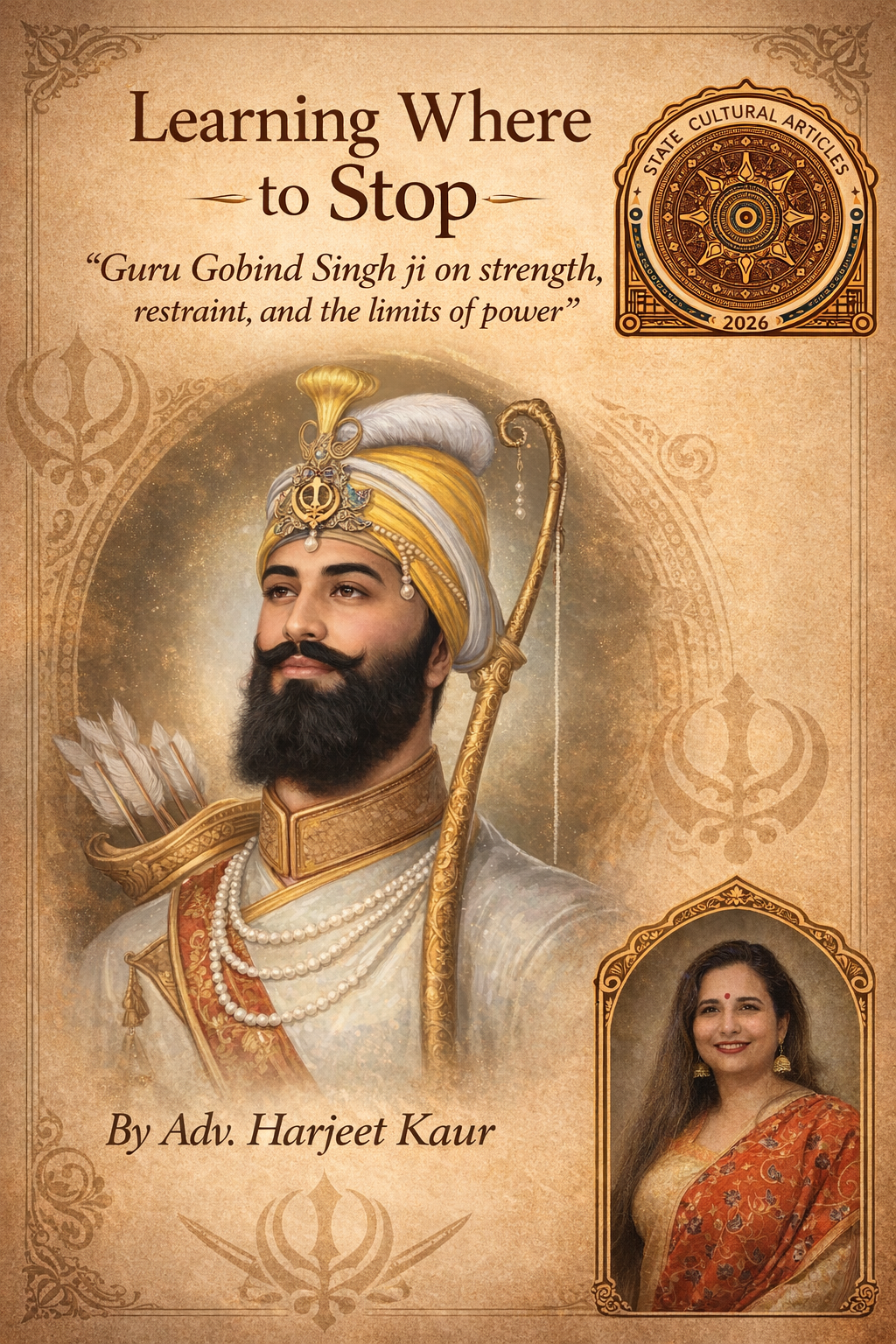
“Guru Gobind Singh ji on strength, restraint, and the limits of power”
By Adv. Harjeet Kaur
A Note to the Readers:
This is not intended to be a comprehensive history of the life of Guru Gobind Singh Ji, nor is it meant to supersede what is accepted by mainstream scholarship. Readers who wish to know the detailed chronology can find it everywhere.
The purpose here is interpretive:
- To consider the field of study that informed his choices;
- Demonstrate the exercise of power in moderation.
- How defeat was no license to overindulgence; and
- The accountability of leadership to conscience.
What if power were judged not by how decisively it was used, but by how deliberately it was restrained?
Guru Gobind Singh Ji (1666-1708) lived like a limitless and non-coercive measure of great strength.
He was both, a saint and a warrior. Both descriptions are accurate, yet neither captures what makes his life endure. He was defiant, not only on issues of injustice, but he also did not overstep and make his opposition an overreach. Life itself is a refutation of that common belief that after the justification of power, a person does not need to restrain their use anymore.
“What is created instead is a self-control-based model of leadership.”
Inheritance without Hatred:
Guru Gobind Singh Ji became the leader when his father, Guru Tegh Bahadur Ji, was executed because he defended the right of people to choose their religion. That was not done by one community; it was a case of conscience itself.
This was followed by a sense of responsibility, rather than inherited anger. It was not whether the young Guru should oppose injustice, but how to do it in a morally upright way at a high cost.
To this inner steadiness, language is given by the Guru Granth Sahib Ji:
ਤੇਰਾ ਕੀਆ ਮੀਠਾ ਲਾਗੈ ॥ ਹਰਿ ਨਾਮੁ ਪਦਾਰਥੁ ਨਾਨਕੁ ਮਾਂਗੈ ॥
What comes is accepted without bitterness; what is sought is the strength to remain grounded in truth.
“This is not despair but calmness–the unwillingness to have grief rule the manner”.
Why the Khalsa Was Formed?
The Khalsa was established in the year 1699 by Guru Gobind Singh. Although it has been termed a martial movement, it initially had an ethical objective. He observed that belief is not enough to overcome injustice propagated by power. His community had to withstand but be morally upright.
The Khalsa rejected:
- Inherited hierarchy.
- caste,
- lineage, and
- Privilege was stripped of authority.
What replaced them was
- obligation:
- to live visibly,
- act responsibly, and
- protect those who could not defend themselves.
This is made clear in the Guru Granth Sahib Ji:
ਸਰਬ ਧਰਮ ਮਹਿ ਸ੍ਰੇਸਟ ਧਰਮ ॥ ਹਰਿ ਕੋ ਨਾਮੁ ਜਪਿ ਨਿਰਮਲ ਕਰਮ ॥
“The highest path is lived through actions shaped by truth”.
“Religion here cannot be separated from action. Khalsa was not established to govern, but to be responsible.”
Leadership without Exception:
One of the notable features of Guru Gobind Singh’s leadership was that he did not want to be excused from anything. He had exposed himself to the same kind of discipline that he required others to practice, and even accepted being initiated by those under his own instruction.
To him, power was no excuse to be immoral.
This questions the tendency that is still present in people’s lives: the view that leadership is a license to be exempt.
A mere Sikh maxim expresses this limit:
ਸਿਰੁ ਦੀਜੈ ਕਾਨਿ ਨ ਦੀਜੈ ॥
ਸਿਰੁ ਦੀਜੈ ਕਾਨਿ ਨ ਦੀਜੈ ॥
One may give everything, but never abandon principle.
“It was not a rhetoric but a structure”.
Loss without Moral Collapse:
He had lost a lot: His father, his mother, and his four sons. Two of them were killed in arms; two were hanged as children, because they would not renounce their religion.
It is not how one suffers, but how one reacts to suffering.
There is no record of:
- indiscriminate revenge,
- No note to excuse the cruelty with mourning.
Instead, he continued to emphasize on clarity and restraint.
Guru Granth Sahib Ji provides the words to this perseverance:
ਜਿਨਿ ਨਾਮੁ ਧਿਆਇਆ ਗੁਪਾਲੁ ਪਾਇਆ ॥ ਸੁਖ ਸਦਕੇ ਤਿਨਿ ਕਲੇਸੁ ਨ ਜਾਇਆ ॥
“Those who remain anchored in truth are not undone by suffering”.
Pain is not denied here. It is refused permission to govern action.
“True strength lies not in how far power can go, but in knowing precisely where it must stop.”
Power Controlled by Conscience:
He has been in perpetual warfare, sieges, betrayal, and pursuit. Even in fighting, he demanded limitations. The Zafarnama is a letter to the Mughal emperor, which was not created out of fury or victory but because it was the right thing to do.
His prayer of direction is accurate:
ਦੇਹਿ ਸਿਵਾ ਬਰੁ ਮੋਹਿ ਇਹੈ ॥ ਸ਼ੁਭ ਕਰਮਨ ਤੇ ਕਭੂੰ ਨ ਟਰੋਂ ॥
Grant me this one thing: that I never turn away from what is right.
“The aim was not victory at any cost. It was coherence and the ability to act without abandoning moral ground.”
Voluntary Surrendering of Power:
Towards the end, Guru Gobind Singh took a very radical step. He terminated the series of human succession and gave scripture the authority. The leadership lies not in the personality, but in the principle.
ਬਾਣੀ ਗੁਰੂ ਗੁਰੂ ਹੈ ਬਾਣੀ ॥ ਵਿਚਿ ਬਾਣੀ ਅੰਮ੍ਰਿਤੁ ਸਾਰੇ ॥
The Word serves as guide; within it flows enduring wisdom.
“Not many leaders destroy structures that make them be without being driven”.
Where Strength Knows When to End:
He cannot be characterized as a person who established firm boundaries to power. His heritage does not compel us to live and die, or put our faith on display like medals. Instead, it calls for moderation, a stable thinking that is not inhuman.
He urges conviction that is not cruel, courage that is not dictatorial, and power based on conscience and not on right.
Guru Granth Sahib Ji gives the last clarification:
ਸਚੁ ਤਾ ਪਰੁ ਜਾਣੀਐ ਜਾ ਸਚੁ ਧਰੇ ਪਿਆਰੁ ॥
ਨਾਉ ਸੁਣਿ ਮਨਿ ਰਹਸੀਐ ਤਾ ਪਾਈਐ ਮੋਖੁ ਦੁਆਰੁ ॥
“Truth is known not by claim, but by fidelity to it; when the heart holds fast to truth, the door to freedom opens.”
“In the end, Guru Gobind Singh Ji remains relevant because he showed that true strength lies not in how far power can go, but in knowing precisely where it must stop”.
Author’s Bio:
It will be the author’s first contribution to the publication. Her study examines history and leadership, focusing on questions of restraint, conscience, and moral responsibility. She consider the past as a place for reflection, rather than commemoration.