
Fabric Intelligence for Garments: Woven, Circular Knits & Flat Knit – A Practitioner’s Handbook
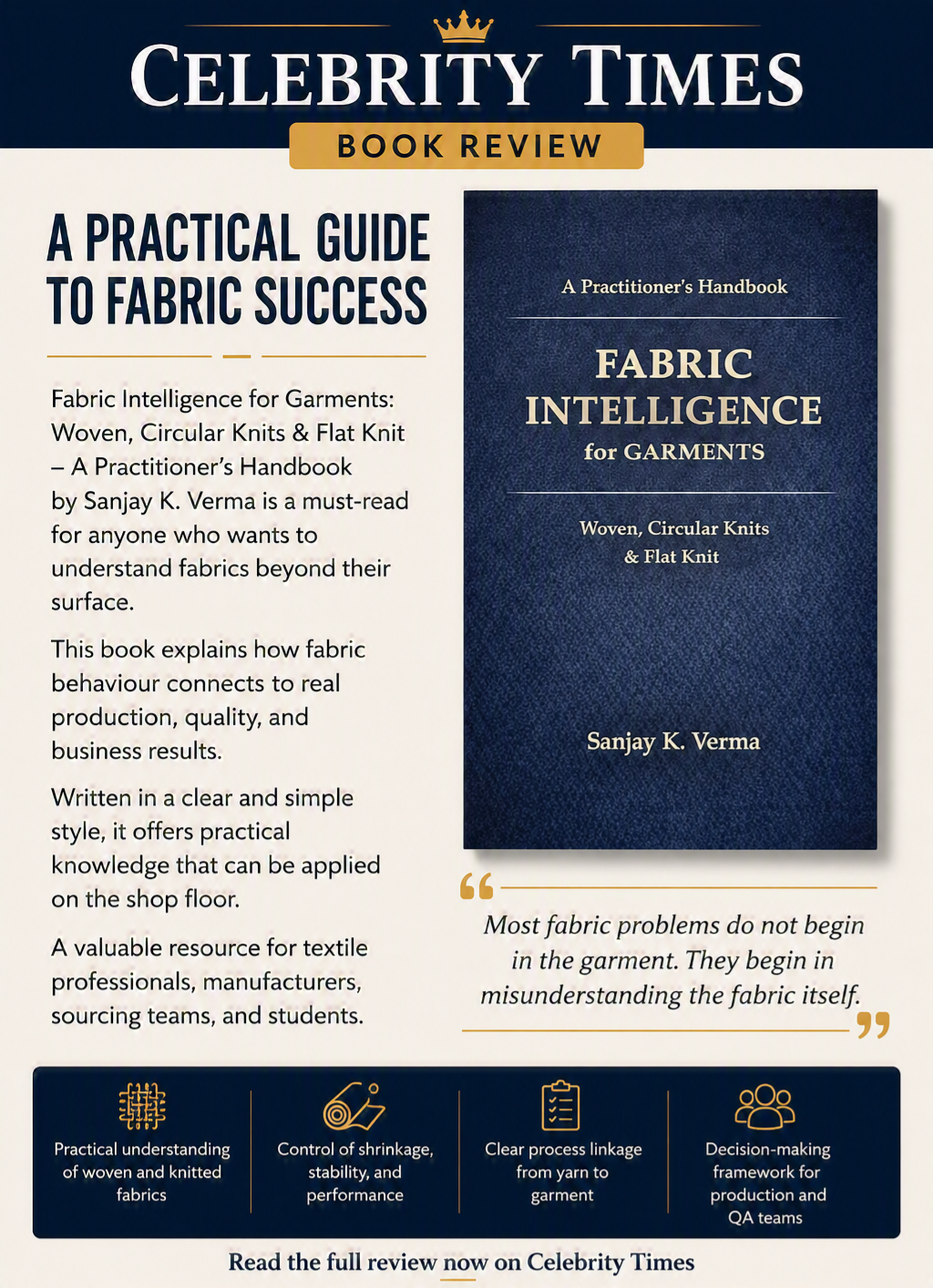
Author: Sanjay K. Verma
Some books are written to inspire, while others are written to solve real problems. Fabric Intelligence for Garments by Sanjay K. Verma clearly belongs to the second category. It is a practical handbook that focuses on helping people understand fabrics beyond their appearance. Instead of discussing fashion trends or design ideas, the author explains how fabrics behave, why they matter, and how making the right fabric decisions can save both time and money in the garment industry.
One thing I appreciated while reading this book is how simple the writing is. Textile manufacturing is a technical subject, but the author avoids unnecessary jargon and explains every concept in a straightforward manner. Even readers who are not textile experts can follow the ideas without feeling overwhelmed. The chapters are short, focused, and easy to read, making the book feel more like a conversation with an experienced industry professional than a textbook.
The chapters on how fabric influences business decisions stood out the most. The author explains that many people believe price is the biggest deciding factor in garment manufacturing, but in reality, choosing the right fabric at the right time often has a much greater impact. A delay in fabric approval can slow down sampling, production planning, costing, and eventually order execution. This practical viewpoint makes readers understand that fabric selection is not just a technical process—it is a business strategy.
Another interesting section discusses pre-developed fabrics. Instead of waiting for a buyer’s enquiry before starting development, the author encourages suppliers to prepare relevant fabrics in advance. This simple idea can reduce development time, increase buyer confidence, and improve business opportunities. It is one of those concepts that sounds obvious once explained, yet many businesses may not actively follow it.
The book also highlights that one fabric cannot suit every brand. Every brand has different customer expectations, price points, quality standards, and production goals. The author explains that selecting fabric is about finding the right match rather than searching for a universally “best” fabric. This balanced approach makes the discussion practical and realistic.
I also liked the chapters that encourage readers to evaluate fabrics based on their actual performance instead of only their appearance. The author explains that a fabric may look impressive during sampling but behave differently after washing, processing, stretching, or repeated use. These observations remind readers that long-term performance is just as important as the first impression.
Throughout the book, Sanjay K. Verma shares ideas that come from years of industry experience rather than theory alone. His explanations are supported by real manufacturing situations, making the advice feel practical and trustworthy. The book does not try to make fabric science complicated. Instead, it simplifies important concepts so readers can apply them in their own work.
The structure of the book is another strength. Each chapter focuses on one specific topic and builds naturally on the previous one. The headings, short paragraphs, and clear examples make it easy to read a few pages at a time while still learning something valuable. It is the kind of reference book that professionals can return to whenever they need guidance.
This book will be especially useful for garment manufacturers, sourcing professionals, merchandisers, textile students, quality control teams, production managers, entrepreneurs entering the apparel business, and anyone who wants a better understanding of how fabrics influence manufacturing decisions. Even readers with limited knowledge of textiles will find useful insights because the explanations remain simple and practical.
Overall, Fabric Intelligence for Garments is an informative and experience-driven handbook that successfully bridges the gap between textile knowledge and business decision-making. Rather than overwhelming readers with technical complexity, Sanjay K. Verma focuses on practical lessons that can be applied in everyday garment manufacturing. It is a valuable resource for anyone looking to understand fabrics not just as materials, but as one of the most important foundations of a successful garment business.
Rating: 4.7/5