
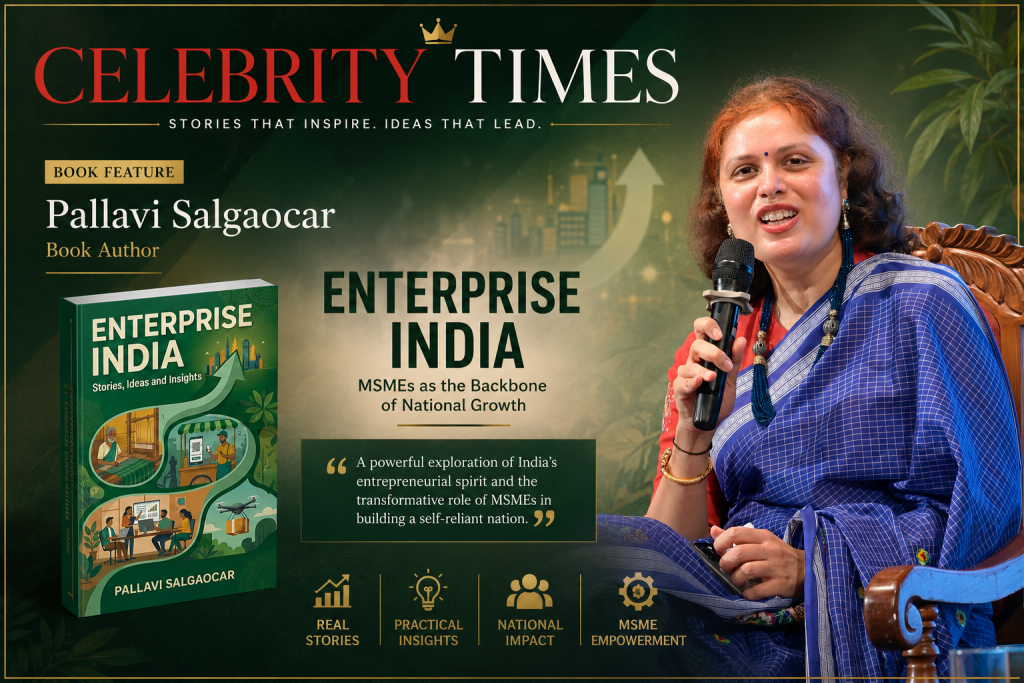
India’s enterprise story is often described through start-ups, unicorns, large corporates and billion-dollar valuations. Yet the deeper and more widespread story lies in the world of micro, small and medium enterprises. MSMEs are present in factories, home-based ventures, family businesses, food units, workshops, service enterprises, artisan clusters, exporters and first-generation businesses across the country. They may not always make headlines, but they carry the everyday weight of India’s economic activity.
MSMEs are not merely a business category. They are a bridge between livelihood creation and nation-building. They generate employment, support supply chains, encourage self-employment, and allow ordinary Indians to become wealth creators. In many towns and districts, MSMEs are the first step towards formal entrepreneurship. They give people the courage to move from skill to enterprise, from wage dependency to ownership, and from survival to growth.
One of the strongest messages in the MSME ecosystem is that tools exist, but entrepreneurs must know how to use them. Government schemes, digital platforms, credit-support mechanisms and dispute-resolution systems have been created to support small businesses. But the real challenge is awareness. Many entrepreneurs either do not know these tools exist or find documentation, portals and institutional follow-up difficult. For an MSME owner, awareness is not a soft advantage. It is a business necessity.
Liquidity remains one of the most serious concerns for MSMEs. A business may be profitable on paper, but if payments are delayed or working capital is blocked, daily survival becomes difficult. Small enterprises have to pay salaries, suppliers, rent, electricity bills, transport costs and loan instalments on time. Platforms such as MSME Samadhaan, TReDS and credit-guarantee support are therefore important. MSME Samadhaan helps raise delayed-payment cases, while TReDS supports invoice discounting and enables businesses to access funds against receivables. Such systems can improve cash flow and reduce dependence on informal borrowing.
The classification and formal registration of MSMEs is another important area. Many businesses continue to operate informally and therefore miss opportunities available under government schemes, financial incentives, priority-sector lending, procurement benefits and support programmes. Udyam registration is a crucial step for MSMEs that want to enter the formal ecosystem. Formalisation gives an enterprise identity. It improves credibility with banks, buyers, departments and digital platforms. It also helps in building data, which is essential for policy support and future growth.
MSMEs must also think beyond local markets. India’s domestic market is large, but the opportunity does not end there. With the right product quality, packaging, compliance, branding and consistency, small businesses can access national and international markets. Digital platforms, e-commerce, government procurement portals and export-promotion initiatives have opened new doors. However, market access requires preparation. Entrepreneurs need to understand costing, quality standards, customer expectations, logistics, labelling, taxation and after-sales service. Growth is not only about making a good product. It is also about reaching the right buyer.
Brand protection is another area that MSMEs often overlook. Many small businesses spend years building trust but do not protect their name, logo, design, recipe, process or local identity. Intellectual Property Rights are not only for large companies. A trademark, design registration, patent, copyright or geographical indication can protect the value created by small entrepreneurs and traditional producers. In a competitive marketplace, identity matters. If a business does not protect its brand, others may copy it.
The future MSME will also have to be sustainable. Sustainability is no longer only a corporate discussion. Buyers, regulators, investors and consumers are increasingly looking at responsible production, packaging, waste management, energy use and supply-chain practices. For MSMEs, sustainability should not be seen as a burden. It can reduce costs and improve competitiveness. Energy audits, waste reduction, recycling, circular economy practices, green packaging, rooftop solar and cleaner technologies can help small businesses become more efficient and future-ready.
Financial literacy is equally important. Many entrepreneurs are excellent at production or service delivery but weak in costing, pricing, cash-flow planning and debt management. A business owner must understand the difference between sales and profit, income and cash flow, productive and unproductive loans, and short-term and long-term finance. Without financial discipline, even a promising enterprise can struggle.
The MSME story is finally a story of mindset. Entrepreneurs must move from isolation to networks, from informal effort to documented growth, from hesitation to awareness, and from survival thinking to strategic planning. Industry associations, banks, mentors, training institutions and government departments must work together to create handholding systems.
Enterprise India is built by people who take risks every day. The manufacturer, the home-based entrepreneur, the artisan, the service provider, the exporter, the woman founder and the young digital entrepreneur all form part of this national story. If MSMEs receive awareness, finance, technology, markets, mentorship and respect, they will not remain small in impact. They will become the true engines of Viksit Bharat.