
Book Review: The House of Anand Rathore
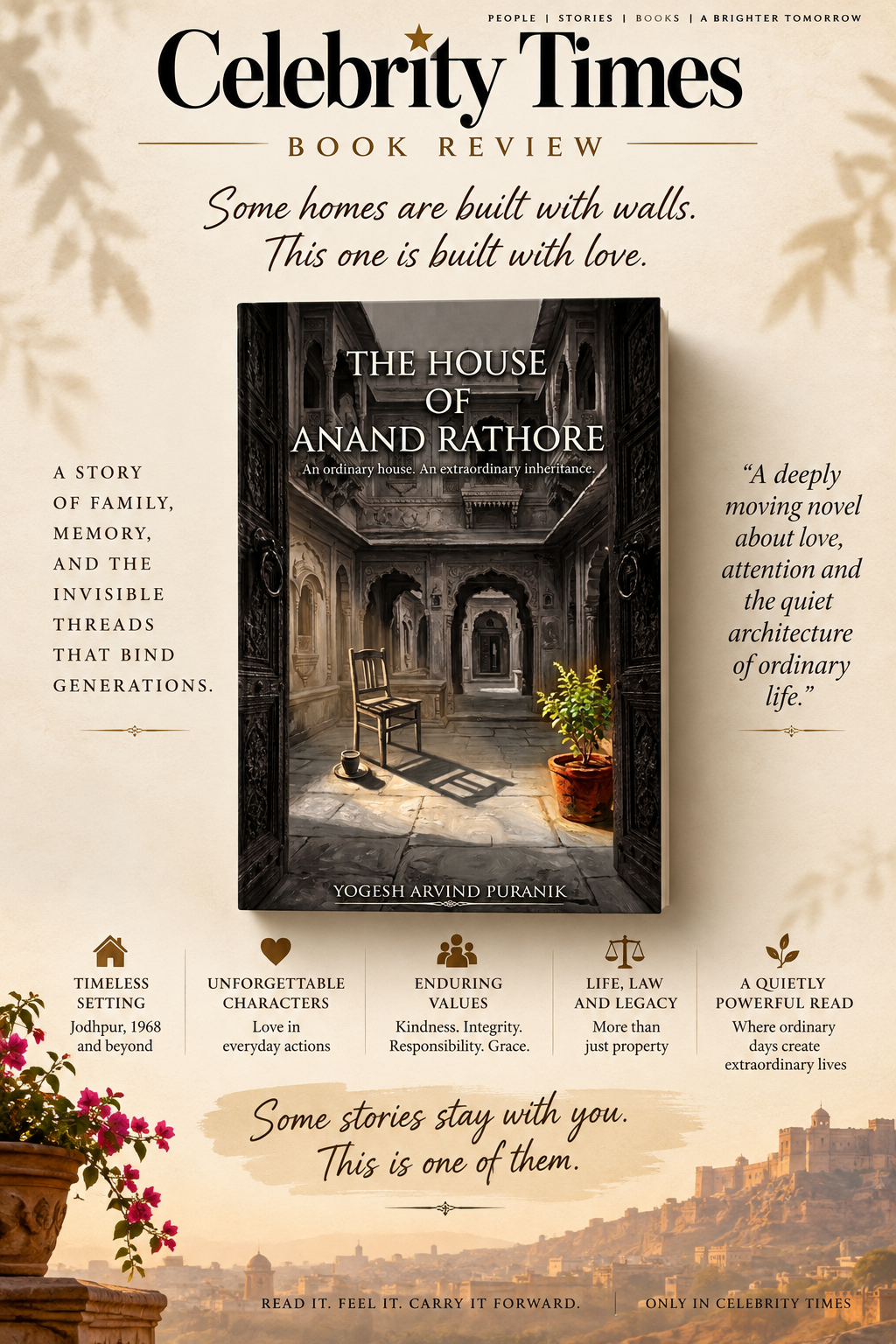
There is something deeply comforting about the world created in The House of Anand Rathore. Set in Jodhpur and spanning five decades, the novel follows Nandini Rathore from the time she enters the Rathore Haveli as a young bride in 1968. What begins as a new chapter in her life slowly becomes a long journey of family, work, relationships, motherhood and belonging.
What I personally found most beautiful about this book is the way it looks at love through everyday actions. The characters do not constantly say what they feel. Instead, they show it by paying attention to each other. A glass of water placed beside someone, a child holding a sibling’s hand, a question asked with genuine interest, books left beside a cradle, or simply sitting together in silence—these small moments carry a lot of emotion.
Nandini is at the heart of this story. Over the years, she becomes an advocate, a wife, a mother and an important part of the family’s emotional world. Her professional life and her life inside the haveli exist together, rather than being presented as two separate identities. One of the interesting aspects of her character is how naturally she learns to make space for both.
The Rathore Haveli is also much more than just the setting. It feels like a living part of the story. It witnesses births, family conversations, disagreements, changing relationships and children growing up. The house slowly becomes a symbol of continuity—a place where every new generation adds something without completely changing what came before.
The relationship between Nandini and Anand is another strong element of the novel. Their companionship is not built around dramatic romance. It is quieter and more mature. They understand each other through attention, trust and small gestures. Many of their meaningful moments happen without lengthy conversations, which makes their relationship feel natural.
The arrival and growing up of the children adds another layer to the story. Navya and Priya bring a new rhythm to the household, and the later chapters beautifully show how a family learns to adjust to new lives. The novel captures the little details of childhood and family life without making them feel exaggerated.
I also liked the way the book connects family life with questions of responsibility, law and inheritance. Anand’s legal work and Nandini’s own connection with the law become part of the larger story. The discussions around an old property dispute, ownership and the intentions of previous generations add another dimension to the novel. At the same time, the book makes it clear that inheritance is not only about property. Sometimes, what a family passes down is much less visible—kindness, integrity, responsibility, patience and the way people treat one another.
The writing style is calm and restrained. The author does not rush to explain every emotion. There are many pauses, silences and understated conversations. A simple “Yes”, “No” or even a nod can mean much more than a long speech. The reader is given enough space to understand the emotions behind those moments.
That quiet style may not be for readers who are looking for a fast-paced story filled with constant twists. But for readers who enjoy literary family stories and character-driven narratives, the slow pace works well because the book is really about how ordinary days build an entire life.
For me, the strongest message of The House of Anand Rathore is that the most important things in a family are often the things nobody announces. People make space for one another. They notice small changes. They take care of each other. They carry memories forward. And slowly, without anyone making a grand decision about it, these everyday actions become the values of an entire family.
The House of Anand Rathore is a warm and thoughtful story about love, family, memory, responsibility and belonging. Its greatest strength lies in its simplicity. It does not need extraordinary events to make its characters matter.
Sometimes, a family story becomes memorable simply because it makes us look differently at the ordinary people and ordinary moments around us.
And this novel does exactly that.