
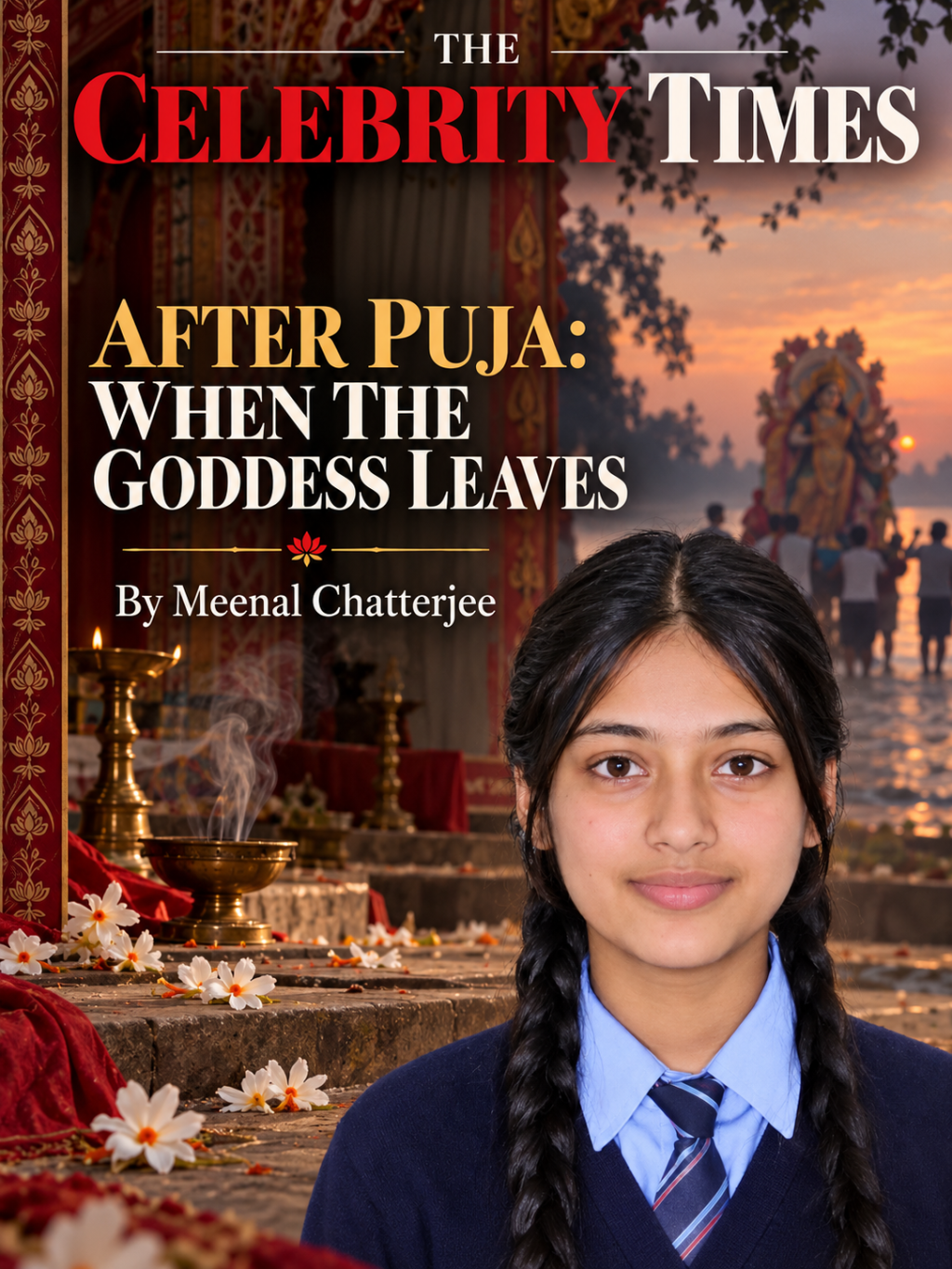
We worship the Goddess with flowers and light,
We sing Her praises through the night.
We bow our heads, we fold our hands,
And pray for peace across our lands.
We dress Her in red, in gold so bright,
We call Her Shakti, our power, our light.
We seek Her blessings, we touch Her feet,
With sacred chants and drums that beat.
But when the pandals begin to fade,
And the final prayers have been prayed,
The lights go dark, the drums grow still,
Does Her divine presence leave the hill?
The streets grow empty, the crowds depart,
But what remains within the heart?
We praised the Goddess, fierce and strong,
Yet how soon we forget what is right and wrong.
We worship Durga, the Mother divine,
Then judge a woman for crossing a line.
We worship Lakshmi for wealth and grace,
Yet deny a woman her rightful place.
We pray to Kali to conquer our fears,
Yet silence the women who shed their tears.
We worship Saraswati, the Goddess of art,
Yet crush a young girl’s ambitious heart.
For nine long nights, we celebrate Her name,
But after the festival, are we still the same?
Do we respect women when no one’s around?
Or is our devotion just a seasonal sound?
The Goddess doesn’t live in a decorated shrine,
Her spirit lives where compassion shines.
She’s in every woman who dares to be free,
In every voice that demands dignity.
The sindoor may fade, the idols may part,
But can we keep the Goddess alive in our heart?
For what is devotion if kindness must end,
When the festival fades and we turn from a friend?
So before we immerse Her in the river’s flow,
Let us ask ourselves what we truly know.
If we worship the Devi but dishonour Her daughters,
Are we devotees—or just festival followers?
Let Puja be more than a moment of prayer,
More than new clothes and the lights that we wear.
Let the lessons of Shakti in our actions remain,
Even when the drums never sound again.
For the greatest offering, the purest art,
Is not the flower we place at Her feet—
It’s a world where every woman is safe,
Where respect is a promise, and justice complete.