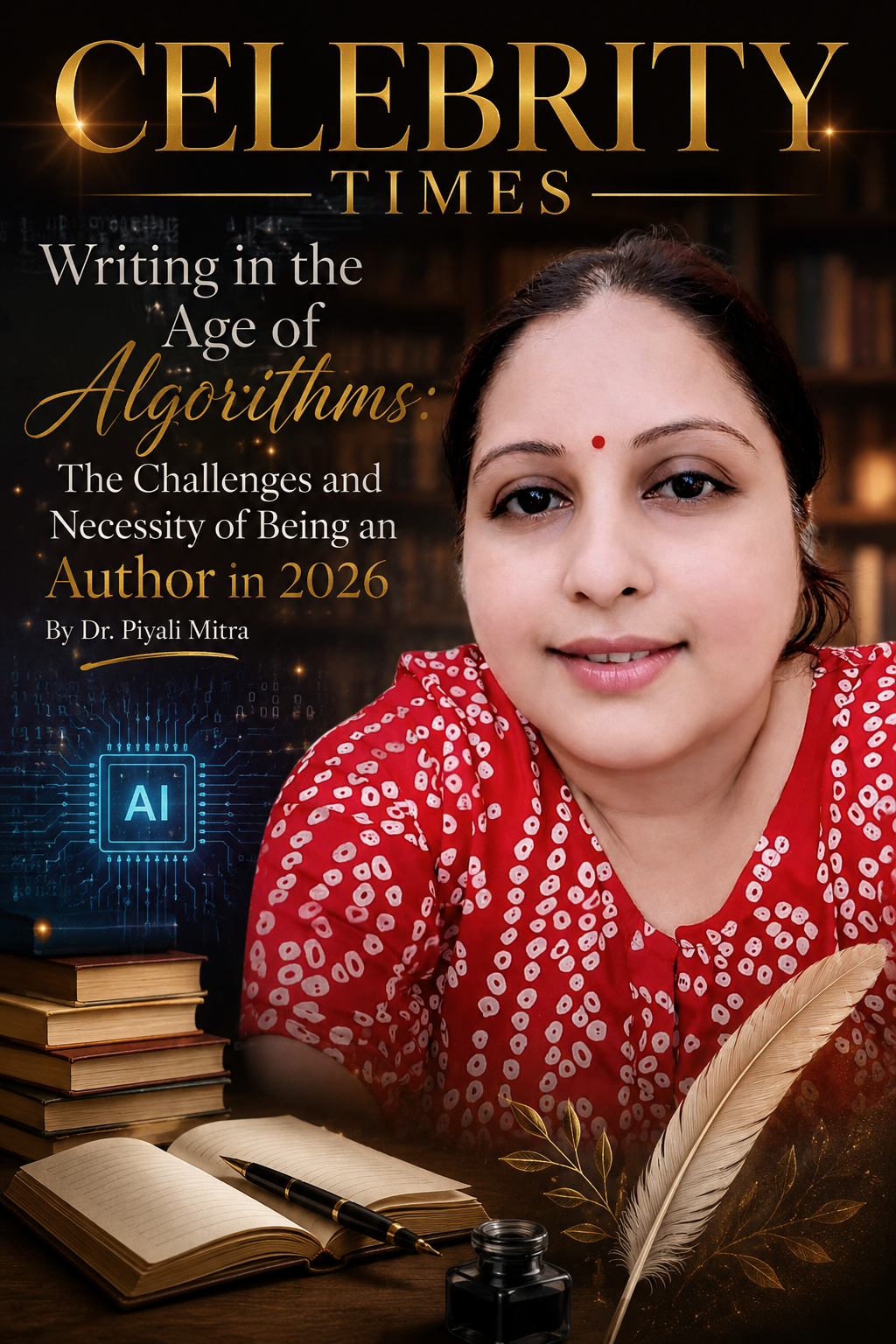
To be an author in 2026 is both more difficult and more necessary than ever before. The digital age has transformed writing from a solitary literary pursuit into a public, algorithm-driven profession where visibility often competes with creativity. Writers today are expected not only to produce meaningful work but also to market themselves continuously across social media platforms, digital publishing spaces, podcasts, webinars, and online communities. In this environment, authorship has become both intellectually demanding and emotionally exhausting.
One of the greatest challenges facing authors in 2026 is the overwhelming saturation of content. Millions of articles, blogs, books, AI-generated essays, and social media posts are uploaded daily. Attention spans are shrinking while competition for readership grows fiercer. A thoughtful essay or carefully researched book may disappear beneath trends, reels, and viral outrage within hours. In such a culture, depth often struggles against speed. Authors are pressured to produce rapidly, remain constantly visible, and adapt to changing digital algorithms that determine whether their work reaches readers at all.
Artificial intelligence has further complicated the literary landscape. AI tools can now generate stories, poems, articles, and even academic prose within seconds. While these technologies can assist creativity, they have also raised profound questions about originality, authenticity, and intellectual labour. Readers increasingly ask whether a text was truly written by a human mind or assembled through automated systems. For many writers, this creates anxiety about relevance and professional survival. Yet paradoxically, the rise of machine-generated language has made genuinely human writing more valuable. Authentic experience, emotional vulnerability, ethical reflection, and philosophical depth remain difficult to replicate artificially. In an age of automation, the human voice gains renewed importance.
Economic uncertainty is another harsh reality. Very few authors today can survive solely through book sales. Many are compelled to combine writing with teaching, editing, freelancing, public speaking, consulting, or content creation. Independent authors often shoulder the burden of publication costs, marketing strategies, and audience building themselves. Even talented writers may struggle financially despite critical recognition. The commercialization of literature means that marketability frequently outweighs literary merit. Publishers increasingly look for authors with established online followings rather than purely original manuscripts.
Censorship and polarization also shape contemporary authorship. Writers across the world face ideological scrutiny from multiple directions. Social media outrage can rapidly transform disagreement into public condemnation. Authors may be attacked for expressing political opinions, religious perspectives, or cultural interpretations that diverge from dominant narratives. In some contexts, governments, institutions, or activist groups attempt to regulate speech through direct or indirect pressure. Consequently, many writers experience self-censorship, carefully calculating which ideas are “safe” to articulate publicly.
Despite these difficulties, the role of the author remains indispensable. Societies require individuals who can preserve memory, question authority, challenge intellectual stagnation, and articulate the emotional realities of human existence. Authors serve as interpreters of civilization. Through literature, philosophy, history, poetry, and essays, they document the anxieties and aspirations of their age. Without writers, societies risk becoming intellectually shallow and emotionally disconnected.
The need for authors is especially urgent in an era dominated by information overload. Facts alone cannot guide human beings; interpretation, wisdom, and moral imagination are equally necessary. Authors help readers navigate complexity by transforming scattered information into coherent meaning. They ask uncomfortable questions about technology, ethics, politics, identity, ecology, and the future of humanity itself.
Moreover, writing remains a powerful act of resistance against forgetfulness. In a rapidly changing world driven by instant consumption, authors preserve continuity between past, present, and future. They protect languages, cultures, philosophical traditions, and personal stories from disappearing into digital noise.
Ultimately, being an author in 2026 requires resilience, adaptability, and courage. It demands the ability to remain intellectually honest in a world increasingly shaped by performance and distraction. The modern author is no longer merely a storyteller but also a cultural witness navigating the tensions between technology and humanity, commerce and creativity, visibility and truth.
The challenges are immense, but so is the necessity. As long as human beings continue searching for meaning, justice, beauty, and understanding, authors will remain essential voices within civilization.
– Dr. Piyali Mitra