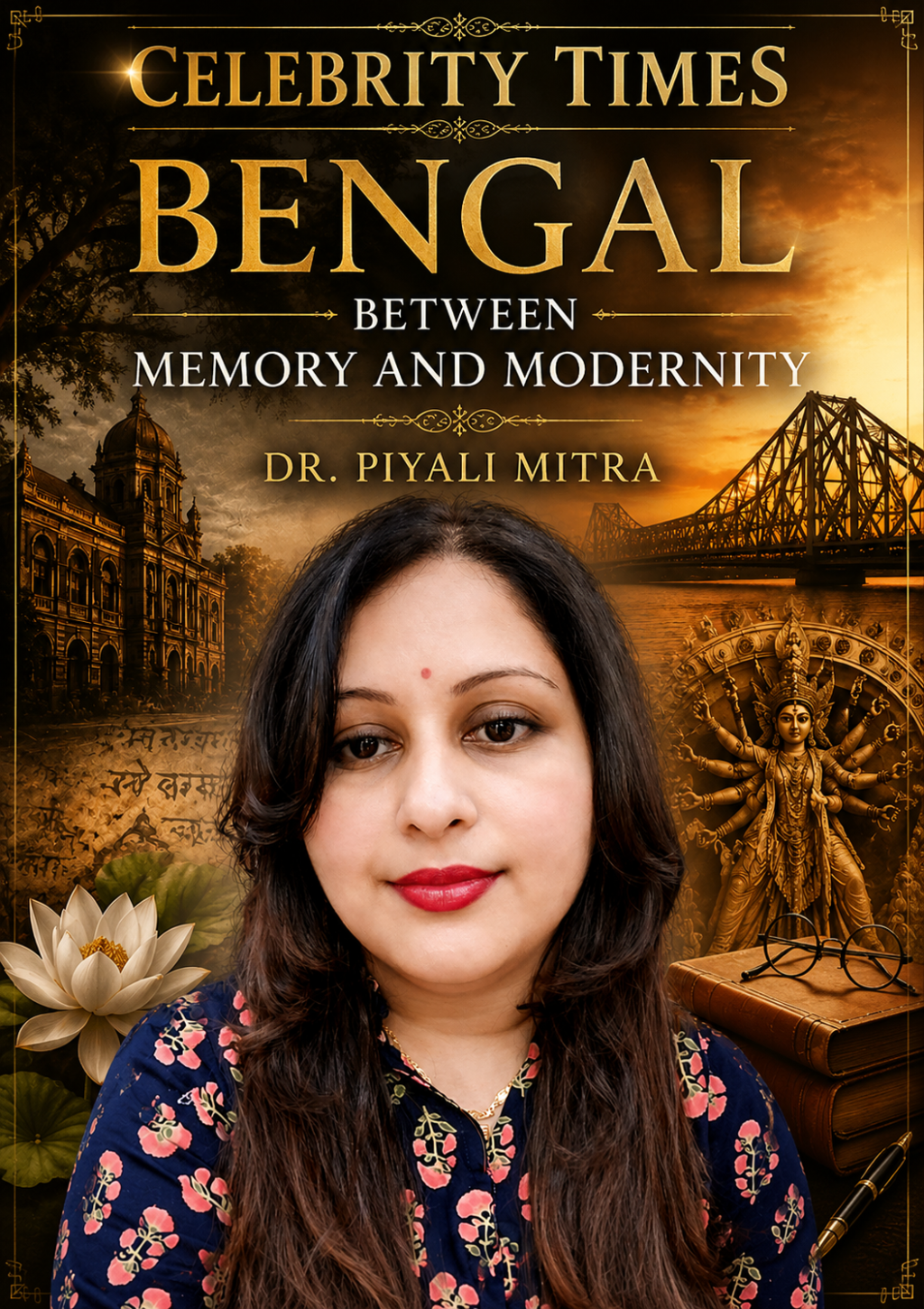
Bengal has always lived in conversation with itself.
It is a land where the past never fully leaves and the present never arrives untouched. In contemporary Bengal, culture is not preserved like an artifact in a museum; it survives as rhythm, argument, nostalgia, adaptation, and contradiction. The Bengali identity today exists somewhere between the sound of the evening conch shell and the glow of a smartphone screen, between centuries-old rituals and the restless speed of modern urban life.
To understand present-day Bengal, one must first understand that Bengali culture has never been singular. It has always been layered—shaped by Hindu devotional traditions, Islamic influences, Baul mysticism, colonial encounters, intellectual movements, folk practices, cinema, poetry, and political upheavals. Bengal carries within itself both the village courtyard and the coffee house debate, both Durga Puja pandals and revolutionary slogans painted on crumbling walls.
Even today, festivals remain at the emotional centre of Bengali society. Durga Puja is no longer merely a religious celebration; it has become Bengal’s largest collective cultural performance. Art, politics, nostalgia, commerce, social identity, and spirituality merge within it. The idol is worshipped, photographed, debated, aestheticized, and finally immersed—as if Bengal annually rehearses the philosophy that beauty itself must eventually dissolve.
Yet beyond the grand spectacles lies another Bengal—the quieter one that still survives in folk culture. In rural districts, Charak, Gajan, Bhadu, Tusu, and Baul traditions continue to breathe, though often overshadowed by urban narratives. The wandering Baul singer with an ektara, singing of the divine within the human body, still represents something profoundly Bengali: a civilization that historically valued inner experience over rigid orthodoxy.
Food, too, remains a language of memory in Bengal. Meals are not simply consumed; they are emotionally inherited. The smell of mustard oil, steaming rice during monsoon afternoons, winter pithas, Poila Baishakh feasts, and evening tea with muri and telebhaja carry within them an entire social history of family, migration, and belonging. Bengali culture often expresses itself less through declarations and more through atmosphere.
At the same time, modern Bengal is undergoing visible transformation. Urbanization, political polarization, digital culture, and economic pressures have altered social relationships. The old “adda” culture—the long, unhurried intellectual conversation once central to Bengali life—competes now with fragmented digital attention spans. Bookstores coexist with reels and algorithms. The Bengali middle class still takes pride in literature and cinema, but increasingly negotiates that identity within a market-driven and hyper-competitive world.
Politically, Bengal remains deeply performative and emotionally charged. Politics is not merely electoral here; it enters language, art, music, neighbourhood conversations, and even family relationships. The Bengali imagination has historically romanticized both revolution and resistance. Yet contemporary Bengal also carries fatigue—economic anxieties, ideological divisions, and the tension between cultural pride and developmental aspiration.
And perhaps this is what makes Bengal compelling even today: it refuses simplification.
It is simultaneously intellectual and emotional, nostalgic and rebellious, refined and chaotic. A Bengali household may discuss Rabindranath Tagore over morning tea while arguing fiercely about politics by evening. The same society that produces poetry also produces relentless political theatre. The same land that worships the goddess also questions authority.
Present-day Bengal stands at a cultural crossroads. Globalization pulls it toward speed, consumption, and reinvention, while memory pulls it backward toward songs, rituals, language, and inherited sensitivities. Between these two forces, Bengal continues to negotiate its identity—not perfectly, not peacefully, but passionately.
And perhaps that passion itself is the truest Bengali tradition of all.
Bengal still lives
in the sound of evening conch shells,
in rain upon old verandahs,
in tea-stained debates that refuse to end.
It walks through crowded puja streets
wearing memory like incense smoke,
half poetry,
half protest.
Here, rivers carry songs,
and even sorrow learns to sing.
Between Tagore and traffic lights,
between Baul songs and broken walls,
Bengal keeps searching for itself—
restless, wounded, alive.
And perhaps that is its greatest tradition:
to feel deeply,
to argue endlessly,
and still find beauty
in the unfinished.