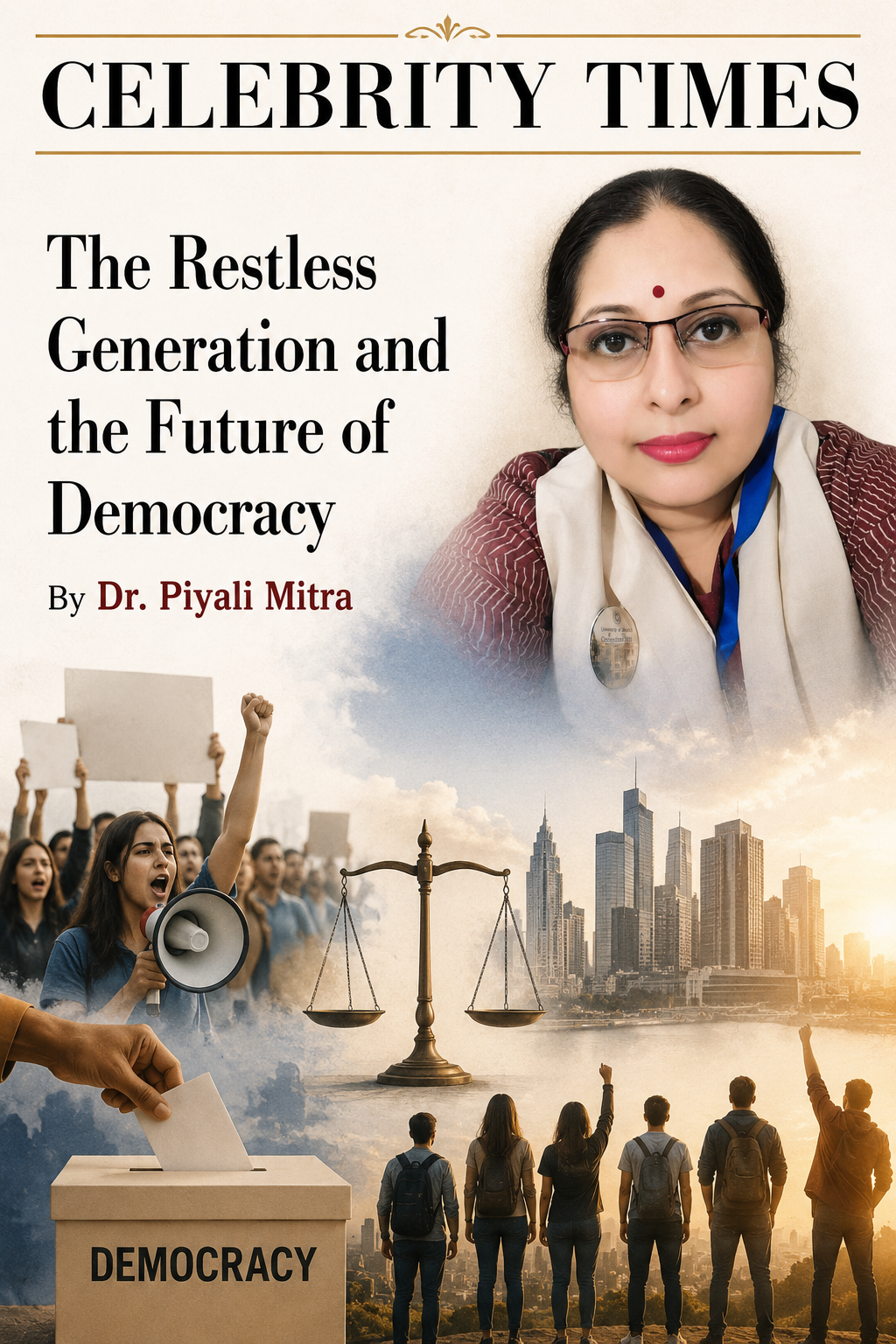
This generation claims to be the most politically aware in history. But awareness without depth is not democracy—it is performance. Politics today has been reduced to hashtags, outrage reels, manipulated narratives, and tribal screaming matches where people no longer think; they react. The smartphone has become the new political battlefield, and algorithms now shape opinions more effectively than ideology ever did.
Everyone wants freedom of expression, but few want the responsibility that comes with it. People demand democracy while refusing to tolerate disagreement. The moment someone challenges a political belief, debate collapses into abuse, cancellation, or ideological branding. Parties are no longer treated as political institutions; they are treated as religious identities. Leaders are worshipped, not questioned. Citizens behave less like participants in a republic and more like digital mobs waiting for their next target.
The current generation often confuses visibility with activism. Posting a slogan is mistaken for political engagement. Rage is performed publicly, but civic responsibility remains absent privately. Democracies do not survive on viral emotion alone. They survive on institutions, constitutional literacy, accountability, and the courage to criticize even those supports. Blind loyalty has destroyed more democracies than opposition ever has.
Social media has democratized speech, but it has also democratized misinformation. Half-truths spread faster than facts because outrage is profitable. Nuance has become unfashionable. Complex political realities are compressed into simplistic binaries: nationalist versus anti-national, liberal versus fascist, left versus right. Once politics becomes entirely tribal, democracy begins to decay from within.
What is even more dangerous is the normalization of cynicism. Many young people today no longer believe politics can produce integrity. Corruption, nepotism, propaganda, and opportunism are accepted almost as inevitabilities. But when citizens stop expecting ethical leadership, they eventually stop demanding it. Democracy weakens not only when politicians fail, but when society lowers its moral expectations of power.
This generation stands at a critical crossroads. It has unprecedented access to information, yet is increasingly vulnerable to manipulation. It speaks constantly about rights but far less about duties. It demands freedom but struggles with restraint. It celebrates dissent selectively—supporting free speech only when it aligns with its own ideological comfort.
A democracy cannot survive on outrage alone. A nation cannot be governed permanently through polarization, fear, or manufactured hysteria. If politics becomes nothing more than emotional theatre, democracy risks transforming into digital mobocracy—where the loudest voices dominate, truth becomes secondary, and public reasoning collapses entirely.
The future of democracy will not be decided merely in elections. It will be decided in whether citizens recover the ability to think critically, disagree civilly, and place constitutional values above political fandom. Because once a society loses the distinction between citizenship and fanaticism, democracy remains only in name.