Article Submitted by Lamiya Siraj
NEWS | FEATURES | EXCLUSIVES
OPINION | EDUCATION & POLICY
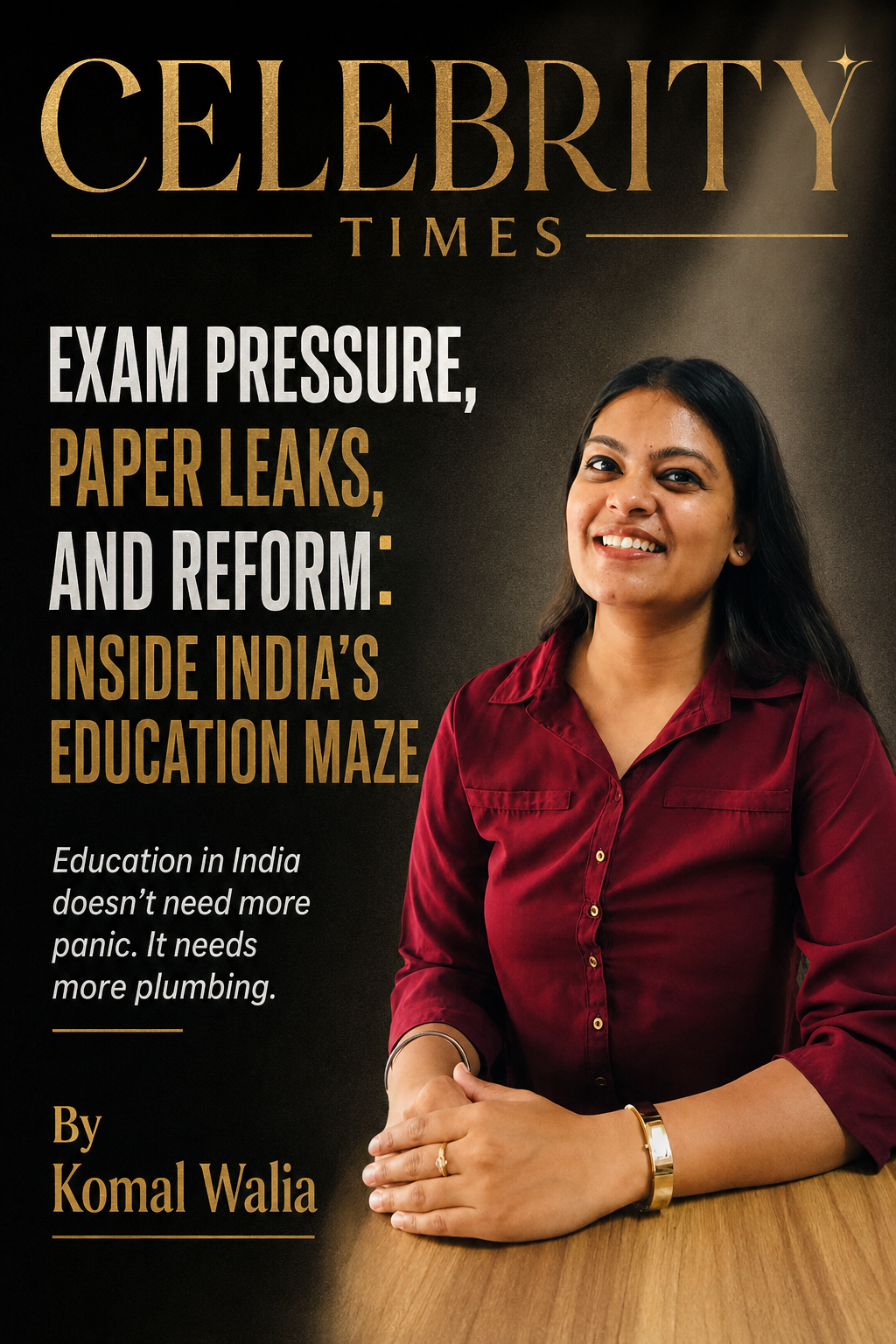
India’s education system is one of the largest in the world, serving over 250 million students from primary school to university. It is structured into 5+3+3+4 under the National Education Policy 2020, but in practice, the board exam years — Class 10 and Class 12 — still dominate how students, parents, and policymakers judge success.
Walk into a kitchen and see a cockroach, and you don’t just blame the insect. You question the hygiene, the storage, the upkeep. In India’s education system, the recent cockroach of headlines — NEET paper leak allegations, 12th CBSE results, and student protests — is doing the same thing. It’s forcing us to look past the surface and ask what’s rotting underneath.
The CBSE Story: Numbers That Don’t Tell the Full Picture
With an 88 percent pass rate, girls outpacing boys, and top scorers earning 99 percent or more, the Class 12 CBSE results for 2025 were predictable. It appears to be business as usual on paper. However, the change occurring behind the figures tells the true tale. Under NEP 2020, CBSE is promoting competency-based questions — less mugging, more application.
Although coaching facilities continue to be the main source of preparation for competitive examinations, teachers and students are adapting to a system that assesses application more than rote memory. The shift between new test patterns and outdated coaching approaches is difficult for students. Good grades remain important, but they no longer guarantee a clear future.
The NEET Scandal: A Betrayal of Trust
The largest medical entrance exam in India became a national scandal in 2024 because of claims of paper leaks and irregularities. For the thousands of students who invested years and lakhs of rupees in their preparation, the leak was more than an administrative mistake. It was a betrayal of confidence.
The problem led to a CBI investigation, legal proceedings, and protests across the country. For millions of candidates, NEET is more than simply a test; it requires years of study and financial support from their families. Calls for improved technology, transparency, and a strong national testing agency model were rekindled when the incident revealed deep flaws in the testing system.
The CBI investigation, court proceedings, and student demonstrations exposed the continued vulnerability of our high-stakes testing system. For NEET 2026, the government has pledged more stringent security and technological safeguards, but trust, once lost, cannot be restored with a press statement.
The “Cockroach Party”: When Problems Can No Longer Hide
This is where the metaphor of the cockroach comes into play. In online student slang, a “cockroach party” refers to issues that have always existed but only receive attention when they scuttle into the open — leaky roofs, outdated curricula, and unequal access to coaching. NEET did not create the pressure cooker. It made it visible. The Class 12 results did not create exam anxiety. They underscored how much we still base a 17-year-old’s future on a single score.
The phrase has surfaced in student forums and social media to describe situations where systemic problems — leaks, poor infrastructure, outdated methods — are ignored until they become impossible to hide, much like pests that scatter when the lights come on. It captures the frustration many students feel when structural flaws are only addressed after a crisis.
The Road Ahead
The latest headlines are uncomfortable, but useful. CBSE results show students can adapt. The NEET scandal shows the system cannot. If we treat these as isolated incidents, we will keep chasing cockroaches. If we treat them as symptoms, we might finally fix the cracks — in testing, in teaching, and in the way we define success.
The CBSE and NTA are under pressure to restore credibility while pushing NEP reforms: skill-based learning, multiple entry-exit options in higher education, and less reliance on single high-stakes tests. The 2025–26 academic year will be a test of whether policy changes can keep pace with student expectations.
India’s education system is at an inflection point. Strong results show resilience, but scandals and student anxiety make clear that structural reform cannot wait. The next few years will decide whether the system moves from exam-centric to learning-centric — in reality, not just on paper.
ABOUT THE AUTHOR
Komal Walia

Komal Walia (MA in English, M.Ed) is a poet, author, digital creator, and editor whose work spans poetry, fiction, and non-fiction. Her articles, poems, interviews, and anthologies have been published in national and international e-magazines. An award-winning author recognised as the Youngest Creative Non-Fictional Author of the Year 2024, she has also received the FAP National Award 2024 for Best Teacher in Innovative Teaching and the prestigious She: The Power of Women Award (Magazine March Edition 2024).
She has self-published 9 books on Amazon Kindle, co-authored 17 books, and written 6 research papers across Punjab. She currently teaches at Cambridge International School, Sangrur.