Conflict management is a vital thread that runs through both corporate administration (business operations, team dynamics, and organizational efficiency) and public administration (government functioning, policy implementation, and public service delivery). The Thomas-Kilmann Conflict Mode Instrument (TKI) offers a practical, flexible framework that bridges these two worlds beautifully, especially in the Indian context where public sector undertakings (PSUs) act as a natural meeting point between corporate efficiency and public accountability.
Understanding the Bridge
Corporate administration focuses on profit, productivity, innovation, and talent retention in competitive markets. Public administration emphasizes service delivery, equity, transparency, and adherence to rules in a bureaucratic, stakeholder-heavy environment. Yet both deal with similar human challenges: diverse teams, resource constraints, hierarchical pressures, and high-stakes decisions.
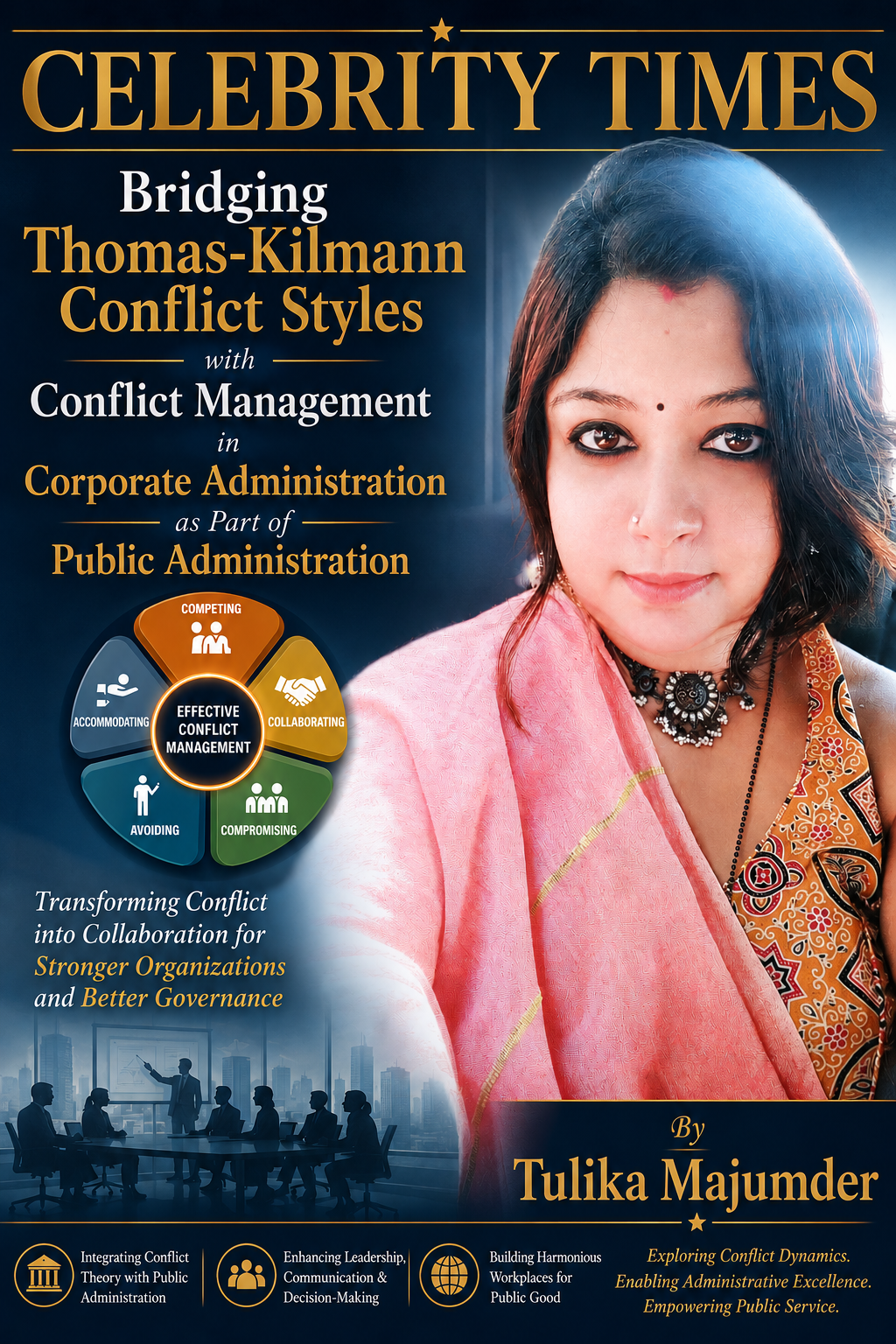
The Thomas-Kilmann model—based on assertiveness (pursuing your concerns) and cooperativeness (addressing others’ concerns)—provides a universal lens. It helps administrators in both sectors choose the right response instead of defaulting to culturally ingrained habits like avoidance or accommodation.
Applying the Five Styles Across Domains
1. Competing (High Assertiveness, Low Cooperativeness)
In corporate administration, this style shines during crises—e.g., a Mumbai IT firm’s manager enforcing a tight deadline to protect client relationships.
In public administration, it becomes essential for regulatory enforcement or ethical stands (e.g., a senior IAS officer prioritizing public safety over departmental pressures). However, overuse can erode trust in bureaucratic settings where long-term relationships matter.
2. Accommodating (Low Assertiveness, High Cooperativeness)
Common in Indian workplaces for maintaining harmony. A corporate HR manager might yield on minor team preferences to boost morale. In public administration, officers often accommodate inter-departmental requests or public grievances to preserve social equity and political balance. The risk? It can delay critical reforms.
3. Avoiding (Low Assertiveness, Low Cooperativeness)
Prevalent in high power-distance Indian cultures, both in private firms and government offices. Juniors may sidestep issues hoping they resolve themselves. In public administration, this can lead to policy paralysis or piled-up grievances. In corporate settings, it risks talent attrition.
4. Collaborating (High Assertiveness, High Cooperativeness)
The ideal “win-win” for complex problems. In corporate India, cross-functional teams in PSUs or private firms co-create solutions for better processes. In public administration, it supports stakeholder consultations, inter-ministerial coordination, and citizen-centric governance—turning conflicts into innovative policies.
5. Compromising (Moderate on Both)
A practical middle path when time is limited. Useful in corporate budget negotiations or public procurement disputes. India’s Administrative Mechanism for Resolution of CPSE Disputes (AMRCD) often relies on such negotiated compromises between PSUs and ministries.
Why This Bridge Matters in India
India’s PSUs (like ONGC, SAIL, or BHEL) embody the fusion of corporate administration and public administration.
They operate with business goals but under government oversight, facing unique conflicts—union demands, policy shifts, inter-departmental rivalries, and public accountability.
– Cultural Fit: Indian public and corporate cultures often favor accommodating or avoiding styles to preserve hierarchy and harmony. TKI training encourages a shift toward collaborating, which aligns with modern reforms like Digital India, ease of doing business, and citizen engagement.
– Organizational Impact: Poor conflict handling in public administration affects service delivery and taxpayer trust. In corporate administration, it hits profitability and innovation. Effective use of TKI reduces the 2-3 hours weekly employees lose to disputes and improves overall performance.
– Policy and Governance: Public administrators increasingly borrow corporate tools. Mediation, negotiation, and TKI-inspired workshops help resolve inter-organizational conflicts (e.g., between departments or with private contractors) more efficiently than traditional litigation.
Practical Integration in Public Administration
Public administrators can embed Thomas-Kilmann principles through:
– Training Programs: Incorporate TKI in Lal Bahadur Shastri National Academy of Administration (LBSNAA) modules or PSU leadership programs.
– Institutional Mechanisms: Use collaborating styles in grievance redressal, public consultations, and AMRCD processes.
– *Hybrid Approach: Blend TKI with Indian strengths—informal *chai dialogues for empathy alongside formal mediation under the Mediation Act, 2023.
The Bigger Picture
Conflict is inevitable in large organizations, whether a bustling corporate office in Bengaluru or a government secretariat in Delhi. The Thomas-Kilmann framework acts as a bridge by promoting self-awareness, flexibility, and situational intelligence.
In corporate administration, it drives efficiency and innovation. When applied to public administration, it enhances governance, reduces bureaucratic red tape, and builds public trust.
Ultimately, mastering these styles helps administrators—corporate or public—transform workplace tensions into opportunities for better collaboration, fairer decisions, and stronger institutions. In India’s rapidly evolving landscape, where public-private partnerships are growing, this integrated approach is not just useful—it is essential for effective, humane administration.