Article Submitted by Lamiya Siraj
OPINION | ARCHITECTURE & HERITAGE
A heritage building in the Ranala Bohra settlement — a striking example of colonial architecture and fine craftsmanship
Heritage buildings remain powerful symbols of our history, culture, and identity in an age when skylines are constantly changing and modern developments are emerging at a remarkable pace. These structures are living storytellers that connect us to our roots and offer valuable lessons for the future.
Every heritage building represents a chapter in human civilization. Whether it is an ancient fort or a palace, a temple or a mosque, a traditional house or a historic marketplace, each structure reflects the culture, values, lifestyle, and skills of the people who built and used it. Through these buildings, we can understand the culture of those communities and how they lived, worked, celebrated, and adapted to their environments long before the arrival of modern technology.
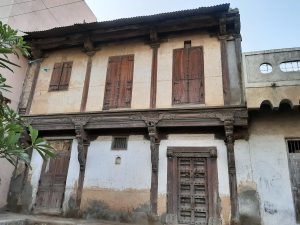
Intricately carved wooden columns and doorways — a showcase of the extraordinary craftsmanship of traditional builders.
One of the most captivating aspects of heritage architecture is its relationship with nature. Traditional builders had an extraordinary understanding of the local climate and resources. They used materials such as mud, clay, stone, lime, timber, and other readily available natural materials. These materials were not only sustainable but also highly effective at creating comfortable living spaces.
Long before air conditioning became common, traditional buildings were designed to remain cool in summer and warm in winter. Thick walls, courtyards, shaded verandas, high ceilings, and carefully positioned windows promoted natural airflow and temperature regulation. These climate-responsive solutions demonstrate a level of environmental intelligence that modern architecture is only beginning to rediscover.
Unfortunately, over time, many of these traditional techniques have been neglected. Modern construction often prioritizes speed, convenience, and commercial value, relying heavily on manufactured materials and energy-intensive systems. While contemporary buildings offer numerous advantages, they frequently overlook the sustainable principles inherent in heritage architecture.
This is why preserving heritage buildings is not simply about protecting beautiful old structures. It is about safeguarding the centuries of accumulated knowledge and culture of that place. These buildings offer invaluable insights into sustainable construction, resource efficiency, craftsmanship, and environmental responsibility. They remind us that innovation does not always mean creating something new; sometimes it means learning from what already exists.
Beyond their architectural significance, heritage buildings play an essential role in preserving cultural continuity. They create a tangible link among past, present, and future generations. They help communities maintain their unique identities and strengthen a sense of belonging and pride. When a heritage structure disappears, we lose not only a building but also a piece of collective memory that can never be fully replaced.
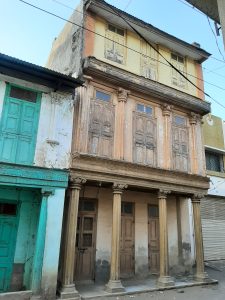
Columns and facades showing the toll of years of neglect — paint peeling, structures deteriorating, stories fading.
As someone deeply passionate about heritage conservation, I often feel conflicted when I visit historic sites. On the one hand, I admire the skill, creativity, and wisdom of the people who built them. On the other hand, I feel a deep sense of sadness when I encounter heritage buildings that have been neglected, abandoned, or left to deteriorate.
One place that particularly touches my heart is my native village, the Ranala Bohra settlement in Maharashtra. During my childhood, it was a thriving settlement filled with life, traditions, and community spirit. Families lived there, celebrations brought people together, and historic structures were an integral part of everyday life. The buildings were not merely shelters; they were examples of colonial architecture and fine craftsmanship, and they were witnesses to generations of stories, memories, and cultural practices.
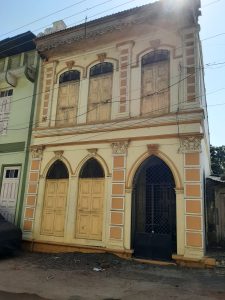
The distinctive arched facades of the Ranala Bohra settlement — once vibrant with families and celebrations.
As urbanization accelerated, many residents moved to cities in search of better employment, education, and living standards. This migration gradually transformed the village’s character. Over time, homes were abandoned, traditional buildings deteriorated, and the once-vibrant settlement slowly lost its charm.
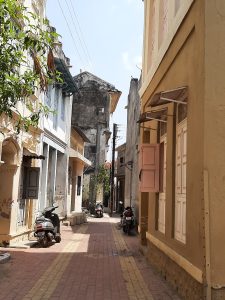
The narrow lanes of the settlement — once echoing with the sounds of daily life, now standing largely silent.
Today, when I visit this settlement, I am confronted with a reality that is both heartbreaking and thought-provoking. The village that once echoed with the sounds of daily life now stands largely silent. Many of its historic structures remain neglected, and in many ways, the place has become a ghost town. As I walk through its narrow lanes, I cannot help but wonder how many stories, traditions, and memories are disappearing with each passing year.
This settlement serves as a reminder of what can happen when heritage is not actively preserved. The loss of historic buildings is not merely physical; it is cultural. When these structures disappear, future generations lose the opportunity to understand the history, traditions, craftsmanship, and identity of the communities that once flourished there.
This is why the conservation of heritage buildings must be a collective responsibility. Effective Heritage Management Plans should include detailed documentation, regular maintenance, restoration guidelines, risk assessments, community participation, and sustainable tourism strategies. Governments, conservation specialists, private organizations, educational institutions, and local communities must collaborate to protect these irreplaceable assets.
Equally important is public awareness. Heritage conservation should not be seen as the responsibility of experts alone. Every individual can contribute by appreciating historic buildings, supporting conservation initiatives, and advocating for their protection. Educating younger generations about the importance of heritage will help create a future where cultural preservation and sustainable development go hand in hand.
The story of places like Ranala Bohra Settlement highlights a broader truth: preserving heritage buildings means preserving the soul of a community. These structures carry the traditions, values, craftsmanship, and cultural identity of the people who lived there. By protecting them, we preserve not only architecture but also the memories and stories that define who we are.
Heritage buildings are far more than monuments of stone and brick. They are sources of wisdom, culture, and environmental knowledge. They teach us how earlier generations lived sustainably and adapted creatively to their surroundings. By conserving them today, we ensure that future generations can continue to learn from them, appreciate their significance, and maintain a meaningful connection to their cultural roots.
The preservation of heritage buildings is ultimately the preservation of culture. If we allow these structures to disappear, we risk losing an important part of our identity. But if we protect, restore, and celebrate them, we pass on a legacy that will continue inspiring generations to come.
ABOUT THE AUTHOR
Ar. Farhana Kapadia-Tajkhan

Ar. Farhana Kapadia-Tajkhan is an Architect and Construction Management professional with more than nine years of experience in the UAE. Her master’s thesis on Heritage Management received the prestigious Thesis Project of the Year award, underscoring her deep passion for heritage and cultural preservation. She has actively participated in national and international research conferences and has contributed as a Statistics Specialist and Field Researcher with leading market research organizations.
With five years of academic experience, she is committed to mentoring future professionals. Her work has appeared in national and international magazines and journals. Through her professional achievements, research contributions, and commitment to education, she continues to make meaningful contributions to the fields of architecture, construction management, and heritage preservation.
Write. Publish. Get Noticed.